If you’ve been paying even a little attention to the wellness world lately, you’ve probably noticed that mushrooms are having a serious moment. Not the kind you toss in a stir fry, but a special category of fungi that people have been quietly revering in traditional medicine for thousands of years. Today, they’re showing up in coffee blends, capsules, tinctures, and skincare products. But what exactly are Lion’s Mane, Reishi, Chaga, and Cordyceps, and why does everyone seem so obsessed with them? This guide breaks it all down in plain language, so you can figure out whether these functional mushrooms deserve a spot in your daily routine.
What Are Functional Mushrooms?
Before diving into the individual profiles, it helps to understand what makes a mushroom “functional.” Functional mushrooms are a specific group of fungi that go beyond basic nutrition. They contain bioactive compounds such as beta-glucans, triterpenoids, polysaccharides, and adaptogens that interact with the human body in meaningful ways. Unlike culinary mushrooms, these varieties are typically consumed as supplements rather than whole foods, although they can certainly be used in cooking too.
The four most talked about functional mushrooms right now are Lion’s Mane, Reishi, Chaga, and Cordyceps. Each one has a distinct appearance, a different set of potential benefits, and a unique history in traditional medicine systems like Traditional Chinese Medicine (TCM) and Ayurveda.
Lion’s Mane: The Brain Mushroom
What Is Lion’s Mane?
Lion’s Mane (Hericium erinaceus) is one of the most visually distinctive mushrooms you’ll ever come across. It looks exactly like its name suggests, with long, cascading white spines that resemble the flowing mane of a lion. It grows naturally on hardwood trees in North America, Europe, and Asia, and it has a long history of use in Japanese and Chinese medicine.
What Are the Benefits of Lion’s Mane?
The reason Lion’s Mane has become the darling of the nootropic community comes down to two compounds it contains: hericenones and erinacines. These compounds have been studied for their ability to stimulate the production of Nerve Growth Factor (NGF), a protein that plays a crucial role in the growth, maintenance, and survival of neurons. In simpler terms, Lion’s Mane may support your brain’s ability to repair and build connections.
People who take Lion’s Mane regularly often report improvements in focus, mental clarity, memory, and mood. Some early research also suggests it may play a role in supporting people dealing with mild cognitive decline, though it is important to note that more large-scale human clinical trials are still needed to confirm many of these effects.
Beyond cognitive function, Lion’s Mane also shows promise for gut health. It appears to support the gut-brain axis, the bidirectional communication highway between your digestive system and your brain, which makes sense given how intertwined these two systems are.
How to Take Lion’s Mane
Lion’s Mane is widely available as a powder, capsule, tincture, or even as a whole dried mushroom that you can cook with. It has a mild, slightly seafood-like flavor that makes it a pleasant addition to soups and pasta dishes. As a supplement, doses typically range from 500 mg to 3,000 mg per day, though you should always follow label guidance or speak with a healthcare professional.
Reishi: The Mushroom of Immortality
What Is Reishi?
Reishi (Ganoderma lucidum) has earned some pretty lofty nicknames over the centuries, including the “Mushroom of Immortality” and the “Queen of Mushrooms.” In Chinese medicine, it was historically reserved for royalty and was considered a symbol of longevity and spiritual potency. It grows on hardwood trees, particularly in humid and hot environments in Asia, and it has a tough, glossy, reddish-brown appearance that makes it look almost lacquered.
What Are the Benefits of Reishi?
Reishi’s primary claim to fame in modern wellness circles is its reputation as a powerful adaptogen. An adaptogen is a natural substance that helps the body adapt to stress, whether physical, emotional, or environmental. When you’re chronically stressed, your cortisol levels rise and your immune system suffers. Reishi contains triterpenoids and beta-glucans that appear to modulate the stress response and support immune function simultaneously.
Many people take Reishi specifically for sleep support. Traditional use and some modern research suggests that Reishi can help quiet the nervous system, making it easier to fall asleep and stay asleep. This is not a sedative effect in the traditional sense but more of a calming, adaptogenic action that helps your body wind down naturally.
Reishi is also strongly associated with immune system modulation. Rather than simply boosting immune function (which can be problematic in people with autoimmune conditions), Reishi appears to help regulate and balance immune activity, making it a more nuanced choice than many immune-support supplements.
How to Take Reishi
Because Reishi is extremely bitter and tough in its whole form, it is almost exclusively consumed as a tea, extract, powder, or capsule. It blends well into evening beverages and is a common ingredient in relaxation or “moon milk” recipes. Reishi is generally considered safe for long-term use, but if you are on blood thinners or immune-suppressing medications, you should consult your doctor before starting.
Chaga: The King of Medicinal Mushrooms
What Is Chaga?
Chaga (Inonotus obliquus) looks nothing like what most people picture when they think of a mushroom. It appears as a dark, charcoal-colored mass that grows primarily on birch trees in cold climates across Siberia, Northern Europe, Canada, and Alaska. It looks almost like a piece of burnt wood or coal from the outside, but inside it has a rich, golden-orange color. Chaga has been used for centuries in Siberian and Eastern European folk medicine, where it was brewed as a tea to support overall vitality.
What Are the Benefits of Chaga?
Chaga is often described as one of the most antioxidant-rich substances on earth. It contains extraordinarily high levels of superoxide dismutase (SOD), an enzyme that neutralizes harmful free radicals in the body. For context, oxidative stress caused by free radicals is linked to accelerated aging and a range of chronic diseases, which is why antioxidant-rich foods and supplements have attracted so much scientific attention.
In addition to its antioxidant profile, Chaga is rich in betulinic acid, a compound derived from the birch trees it grows on. Betulinic acid has been studied in the laboratory for its potential anti-inflammatory and immune-supporting properties. Chaga also contains beta-glucans, just like the other mushrooms in this guide, which further supports its reputation as an immune-modulating agent.
People who use Chaga regularly often cite benefits such as reduced inflammation, improved energy levels, and better digestive health. Some also use it as a coffee substitute because it has a naturally earthy, slightly vanilla-like flavor when brewed as a tea.
How to Take Chaga
Chaga is most traditionally consumed as a tea or decoction, made by simmering chunks or powder of the mushroom in water for an extended period. It is also available in tinctures, capsules, and powders that can be blended into drinks. One important note: because Chaga is high in oxalates, people who are prone to kidney stones should exercise caution and speak with their healthcare provider before adding it to their routine.
Cordyceps: The Energy and Performance Mushroom
What Is Cordyceps?
Cordyceps (Cordyceps sinensis and Cordyceps militaris) has one of the most fascinating and frankly bizarre origin stories in the natural world. Wild Cordyceps sinensis is a parasitic fungus that grows on caterpillar larvae at high altitudes in the Himalayan plateau, and it was historically so rare and prized that it sold for more than its weight in gold. Today, most commercial Cordyceps supplements use the Cordyceps militaris variety, which can be cultivated on plant-based substrates and is widely considered to have similar bioactive properties.
What Are the Benefits of Cordyceps?
Cordyceps has built its modern reputation almost entirely around athletic performance and energy. The mushroom came to international attention in 1993 when a group of Chinese distance runners shattered world records and later attributed part of their training regimen to Cordyceps supplementation. Whether or not Cordyceps alone was responsible, it put this mushroom firmly on the map.
The main mechanism researchers point to involves adenosine triphosphate (ATP) production. ATP is the primary energy currency of your cells, and Cordyceps appears to help the body produce it more efficiently. It also seems to support oxygen utilization, which is why it has become particularly popular among endurance athletes, hikers, and anyone who wants to support stamina and reduce fatigue.
Beyond athletic performance, Cordyceps also shows potential for supporting healthy libido and sexual function, a use that dates back to its traditional applications in Tibetan and Chinese medicine. Additionally, its adaptogenic properties mean it can help the body manage physical stress, which is why it is often included in pre-workout supplements and wellness stacks.
How to Take Cordyceps
Cordyceps is available as a powder, capsule, or liquid extract. Many people blend Cordyceps powder into their morning coffee, pre-workout shake, or smoothie. It has a mild, slightly earthy flavor that is not overwhelming. Typical supplement doses range from 1,000 mg to 3,000 mg daily, and it is generally well tolerated by healthy adults.
How Do These Four Mushrooms Compare?
Each of the four mushrooms has its own primary strength, which makes it relatively easy to decide where to start based on your personal wellness goals.
Lion’s Mane is the go-to choice if your primary interest is cognitive health, focus, and memory. It is the most brain-centric of the four and is the best option for students, professionals, or anyone experiencing age-related mental fog.
Reishi is best suited for people dealing with chronic stress, poor sleep, or immune imbalances. Its calming adaptogenic properties make it an ideal evening mushroom and a gentle, long-term companion for your immune system.
Chaga is the top pick for those interested in antioxidant support, inflammation reduction, and general immune protection. If you’re someone who thinks a lot about aging and cellular health, Chaga deserves your attention.
Cordyceps is the obvious choice for anyone focused on energy, physical endurance, and athletic recovery. It is the most stimulating of the four and works best when taken earlier in the day.
Can You Take All Four Together?
One of the most common questions beginners ask is whether it is safe to combine these mushrooms. The short answer is yes, most people tolerate combination mushroom products very well, and in fact many wellness brands now offer blended mushroom supplements that include all four in a single capsule or powder. These blends are designed to provide a broad spectrum of benefits rather than targeting just one area.
That said, if you are new to functional mushrooms, it is generally a good idea to start with one or two and see how your body responds before adding more. This also makes it easier to identify which mushroom is producing which effect for you personally.
What to Look for When Buying Mushroom Supplements
Not all mushroom supplements are created equal, and this is one area where beginners often get tripped up. The most important thing to look for is whether the product uses mushroom fruiting bodies rather than just mycelium grown on grain. The fruiting body is the actual mushroom cap and stem, and it contains the highest concentration of the bioactive compounds discussed in this article.
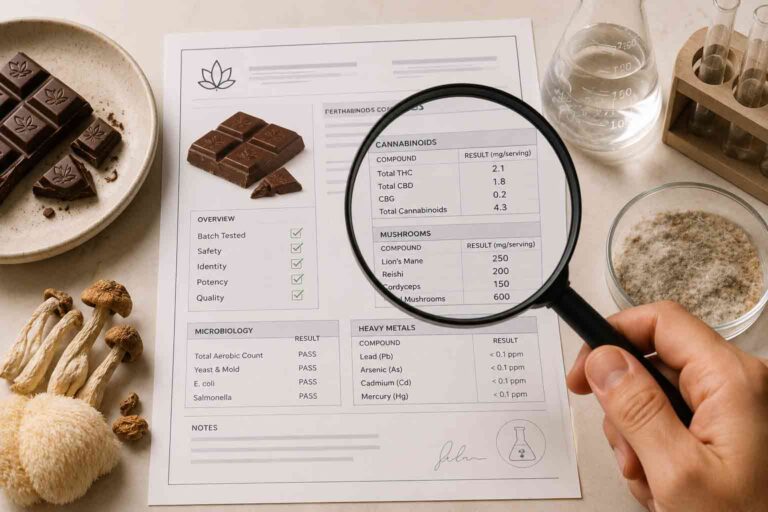
You should also look for products that specify their beta-glucan content, as this is the key marker of potency and efficacy. Third-party testing and certifications like USDA Organic or NSF International are additional markers of quality and transparency.
Are There Any Side Effects or Precautions?
Functional mushrooms have a strong safety profile and have been used by humans for thousands of years without major adverse effects. However, they are not entirely without considerations. Some people may experience mild digestive discomfort when starting out, particularly with Lion’s Mane or Chaga. As mentioned, Chaga’s high oxalate content warrants caution for those with kidney issues.
People who are pregnant, breastfeeding, immunocompromised, or taking medications including blood thinners, immunosuppressants, or diabetes medications should consult a healthcare provider before beginning any mushroom supplement regimen.
Conclusion
Lion’s Mane, Reishi, Chaga, and Cordyceps represent four of the most well-studied, well-respected, and genuinely exciting natural wellness tools available today. They are not miracle cures, and no supplement should be treated as one, but the evidence supporting their use for cognitive health, stress resilience, antioxidant protection, and physical performance is compelling and growing. Whether you are drawn to Lion’s Mane for sharper thinking, Reishi for better sleep, Chaga for antioxidant defense, or Cordyceps for a natural energy lift, there has never been a better time to explore what these remarkable fungi can do for your health. Start slow, choose quality products, and give your body time to respond. The results might just surprise you.
Frequently Asked Questions
1. Which mushroom is best for beginners?
Lion’s Mane is often recommended as the best starting point because its benefits are easy to notice, its side effects are minimal, and it is widely available in approachable formats like coffee blends and capsules.
2. How long does it take for functional mushrooms to work?
Most people begin noticing subtle effects within two to four weeks of consistent daily use. Functional mushrooms are not fast-acting supplements; they work gradually by supporting your body’s natural systems over time.
3. Can I take functional mushrooms every day?
Yes, all four mushrooms are generally considered safe for daily long-term use. In fact, consistent daily consumption is recommended to experience their full range of benefits, as they build up their effects over time.
4. Are mushroom supplements safe for everyone?
They are safe for most healthy adults, but pregnant or breastfeeding women, people on blood thinners, and those with autoimmune conditions should consult a doctor before starting any functional mushroom supplement.
5. Do functional mushrooms contain caffeine or stimulants?
No, none of the four mushrooms contain caffeine or traditional stimulants. Cordyceps may feel energizing because it supports ATP production and oxygen utilization at the cellular level, but it does not cause the jitteriness associated with caffeine.