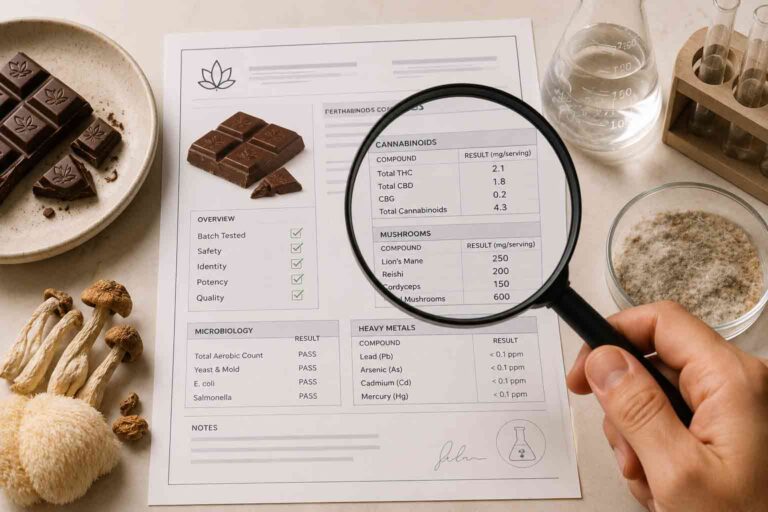
Mushroom candy bars containing psilocybin have grown increasingly popular as more people explore their effects for recreational or therapeutic purposes. Whether you are curious out of concern, research interest, or personal awareness, understanding how long psilocybin from a mushroom chocolate bar stays in your body is a genuinely important question. The answer depends on several biological and chemical factors, and the timeline is more nuanced than most people expect.
What Is a Mushroom Candy Bar?
A mushroom candy bar is a chocolate confection infused with psilocybin, the psychoactive compound found in certain species of fungi commonly known as “magic mushrooms.” These products are designed to make the consumption of psilocybin more palatable and dose-controlled compared to eating dried mushrooms directly. They come in various strengths, typically ranging from 1 gram to 3.5 grams or more of dried mushroom equivalent per bar, with individual squares portioned for microdosing or full experiences.
Because chocolate masks the earthy taste of mushrooms and may slightly affect absorption speed due to its fat content, mushroom candy bars have become a preferred format for many users. The psilocybin content, however, behaves in the body the same way it would regardless of the delivery method.
How Does Psilocybin Work in the Body?
When you consume a mushroom candy bar, the psilocybin is absorbed through the gastrointestinal tract and rapidly converted by the liver into psilocin, which is the compound that actually produces psychedelic effects. This conversion process, called dephosphorylation, happens quickly, which is why the onset of effects typically begins within 30 to 60 minutes of ingestion when consumed with food, or as early as 20 minutes on an empty stomach.
Psilocin then crosses the blood-brain barrier and binds to serotonin receptors, particularly the 5-HT2A receptor, creating the altered perception, emotional shifts, and visual distortions associated with a psychedelic experience. The peak of the experience usually occurs between 90 minutes and 3 hours after ingestion, with the full experience lasting 4 to 6 hours for most people.
How Long Do the Effects Last?
The subjective effects of a mushroom candy bar generally last between 4 and 6 hours, though this can extend to 8 hours in some individuals depending on dose, metabolism, body weight, and prior experience. Higher doses tend to produce longer-lasting experiences, while microdoses may result in subtle effects that fade within 2 to 3 hours.
Even after the perceptual effects subside, many users report an “afterglow” period, a sense of calm, clarity, or emotional warmth, that can persist for hours or even into the following day. This is not the same as the compound still being active in a pharmacologically significant way, but rather a neurological response that continues as the brain recalibrates.
How Long Does Psilocybin Stay in Your Blood?
In terms of blood detection, psilocybin and psilocin are eliminated from the bloodstream relatively quickly. Psilocin has a half-life of approximately 50 minutes to 2 hours, meaning the body reduces its concentration by half in that time frame. Within 24 hours of ingestion, psilocin is largely undetectable in blood for most people.
Standard blood tests are not typically used to screen for psilocybin because of this short detection window. Unless a blood test is administered within a very narrow window, ideally within 6 to 12 hours of consumption, it is unlikely to detect meaningful levels of the compound. This makes blood testing impractical for most screening scenarios.
How Long Does Psilocybin Show Up in Urine?
Urine testing is the most common method of drug screening, but psilocybin is not included in standard 5-panel or 10-panel drug tests. It requires a specialized and relatively expensive assay to detect. When tested specifically, psilocybin metabolites may be detectable in urine for up to 24 hours in most users, though some extended-detection studies have suggested a window of 1 to 3 days depending on dose and individual metabolism.
For those with slower metabolisms, higher body fat percentages, or compromised liver function, the detection window may extend slightly. However, compared to cannabis, which can linger in urine for weeks in heavy users, psilocybin clears the body remarkably fast.
Can a Hair Follicle Test Detect Mushroom Candy Bars?
Hair follicle testing is known for detecting drug use over a much longer period, typically up to 90 days. In theory, psilocin metabolites could be incorporated into hair follicles as they grow. However, in practice, hair follicle tests for psilocybin are extremely rare, prohibitively expensive, and not used in standard employment or legal drug screening. The concentration of psilocin metabolites that make it into hair is also very low, making reliable detection difficult.
It is important to note that no commercially widespread hair follicle test currently screens for psilocybin as a routine matter. So while there is a theoretical detection window, the practical risk is minimal.
Factors That Affect How Long Psilocybin Stays in Your System
Several personal and situational variables influence how quickly your body processes and eliminates psilocybin from a mushroom candy bar.
- Metabolism plays the largest role. People with faster metabolic rates process psilocin more quickly, shortening the detection window significantly. Age, thyroid function, and overall health all influence metabolic speed.
- Body weight and composition matter as well. While psilocybin is not highly lipophilic (fat-soluble) compared to cannabis, individuals with higher body mass may process it differently due to variations in blood volume and organ function.
- Dose consumed is a straightforward factor. The more psilocybin you ingest, the longer it takes for your body to fully metabolize and excrete it. A mushroom candy bar containing 3.5 grams of mushroom equivalent will stay in the system longer than one containing 1 gram.
- Hydration and kidney function influence urinary excretion rates. Drinking adequate water supports faster elimination through urine, though it does not dramatically shorten the detection window.
- Liver health is critical because the liver is responsible for converting psilocybin to psilocin and then further breaking it down. Individuals with liver conditions may metabolize psilocybin more slowly.
- Whether you ate beforehand affects absorption rate. Consuming a mushroom candy bar with a fatty meal can slow absorption and may slightly prolong the presence of psilocin in the bloodstream.
Does Tolerance Affect How Psilocybin Is Processed?
Psilocybin produces rapid and robust tolerance. If someone uses mushroom candy bars on back-to-back days, the second experience is significantly blunted because the brain’s serotonin receptors downregulate quickly in response to stimulation. Interestingly, this tolerance also cross-applies to LSD and other serotonergic psychedelics.
However, this tolerance does not mean the compound clears the system faster. The pharmacokinetics, which covers how the body absorbs, distributes, metabolizes, and excretes psilocybin, remain essentially the same regardless of tolerance. Tolerance is a receptor-level phenomenon, not a metabolic one.
Does a Mushroom Candy Bar Show Up on a Standard Drug Test?
This is one of the most commonly searched questions, and the direct answer is: no, not on a standard drug test. The typical 5-panel urine test screens for cannabis (THC), cocaine, amphetamines, opioids, and phencyclidine (PCP). Psilocybin is not on this list.
Extended panels, including 10-panel or 12-panel tests, add substances like benzodiazepines, barbiturates, methadone, and propoxyphene, but still do not include psilocybin. Detecting psilocybin requires a dedicated immunoassay or mass spectrometry test that must be specifically ordered, which is uncommon in most workplace, sports, or legal testing contexts.
That said, it is always important to be aware of the specific test being administered, especially in specialized legal, forensic, or research settings where expanded panels may be used.
What Happens to Psilocybin in the Body Over Time?
To summarize the pharmacological timeline clearly: after consuming a mushroom candy bar, psilocybin begins converting to psilocin within minutes. Psilocin reaches peak plasma concentration within 1 to 2 hours, then begins declining rapidly. By 6 hours, the active experience has ended for most people. By 24 hours, psilocin is essentially undetectable in blood and largely cleared from urine. Trace metabolites may persist in urine for up to 3 days in some individuals but are rarely tested for.
The body is remarkably efficient at processing psilocybin compared to many other substances, which is one reason why psilocybin has attracted scientific interest. Its relatively clean pharmacokinetic profile makes it manageable in controlled therapeutic settings.
Can You Speed Up the Elimination of Psilocybin?
There is no medically proven method to dramatically accelerate the elimination of psilocybin from the body. However, general health practices can support the body’s natural detoxification processes. Staying well-hydrated encourages renal excretion. Getting adequate sleep supports liver function and overall metabolic health. Avoiding alcohol during and after use prevents additional stress on the liver. Eating a balanced diet with fiber supports digestive health, which plays a minor role in excretion.
None of these strategies will dramatically shorten the pharmacokinetic timeline. Psilocybin will clear your system at roughly the same pace regardless, but these habits support your overall wellbeing during and after the experience.
Legal and Safety Considerations
It is essential to acknowledge that psilocybin remains a Schedule I controlled substance under federal law in the United States and is illegal in many countries worldwide. While some jurisdictions, including Oregon, Colorado, and several cities, have moved toward decriminalization or regulated therapeutic use, mushroom candy bars exist in a complicated legal gray area in most places.
Beyond legality, safety is paramount. Psilocybin can produce intense psychological experiences, and individuals with a personal or family history of psychosis, schizophrenia, or certain mental health conditions should exercise extreme caution or avoid use entirely. Set (mindset), setting (environment), and dose are critical factors in determining whether an experience is positive or overwhelming.
Conclusion
A mushroom candy bar containing psilocybin stays in your system for a relatively short time compared to many other substances. The active effects typically last 4 to 6 hours, psilocin clears from the blood within 24 hours, and urine detection is possible for up to 1 to 3 days with a specialized test, though standard drug screens do not test for psilocybin at all. Individual factors like metabolism, body composition, dose, and overall health influence the exact timeline.
Understanding the pharmacokinetics of psilocybin is valuable for making informed, responsible decisions. Whether approached from a harm-reduction perspective, medical curiosity, or general awareness, knowing how your body processes this compound allows for greater safety and clarity. As research into psilocybin continues to expand, particularly in therapeutic contexts, access to accurate, science-grounded information becomes increasingly important.
Frequently Asked Questions
Q1: How long does a mushroom candy bar stay in your system?
Psilocybin from a mushroom candy bar is typically cleared from your blood within 24 hours and from your urine within 1 to 3 days, depending on your dose, metabolism, and overall health.
Q2: Will a mushroom candy bar show up on a drug test?
Not on a standard drug test. Most workplace and legal drug screenings do not test for psilocybin. Only a specialized, specifically ordered test can detect it.
Q3: How long do the effects of a mushroom candy bar last?
The psychedelic effects generally last between 4 and 6 hours, though some people may feel lingering afterglow effects well into the following day.
Q4: Does eating before taking a mushroom candy bar affect how long it stays in your system?
Eating a fatty meal before consumption can slow absorption slightly, which may marginally extend how long psilocin remains in your bloodstream, but the overall elimination timeline stays largely the same.
Q5: Can you flush psilocybin out of your system faster?
There is no proven way to significantly speed up elimination. Staying hydrated, getting good sleep, and avoiding alcohol can support your body’s natural process, but psilocybin will clear at its own pace regardless.