Quick answer: Two very different fungi movements are converging under one “magic mushroom” headline, and confusing them matters. Psilocybin therapy — the psychoactive compound in “magic mushrooms” — is legally available through licensed clinics in only three US states (Oregon, Colorado, and New Mexico), while remaining a federal Schedule I substance everywhere else. Separately, non-psychoactive functional mushrooms like lion’s mane, reishi, and cordyceps are fully legal nationwide as dietary supplements and now represent a market worth more than $13 billion in 2026. One is a tightly regulated medical frontier; the other is a grocery-aisle wellness trend. Both are reshaping how Americans think about fungi, and both are growing fast for very different reasons.
Two Fungi Stories Wearing the Same Headline
Search “legal mushrooms” and you’ll get results tangled between two industries that share biology but almost nothing else. The first is psilocybin-assisted therapy: a supervised clinical experience involving a Schedule I psychoactive compound, available at a handful of licensed facilities, costing thousands of dollars per session. The second is functional mushroom supplements: caffeine-free coffee alternatives, nootropic gummies, and immune-support capsules made from species like lion’s mane and reishi that contain no psilocybin at all and can be bought on Amazon.
Marketing copy, TikTok trends, and even some news coverage blur the line between them, which creates real confusion for consumers trying to figure out what’s actually legal where they live. This piece separates the two, then explains why they’re both accelerating at the same moment.
Where Psilocybin Therapy Is Actually Legal in 2026
As of mid-2026, licensed, adult-use psilocybin therapy operates in exactly two states with fully functioning programs, plus a third state building toward launch:
- Oregon was first, following the 2020 passage of Measure 109. Adults 21 and older can access psilocybin at licensed service centers without a medical diagnosis or physician referral. More than 100 service centers are now licensed and operating statewide, though roughly 25 of Oregon’s 36 counties opted out of hosting facilities under a local-control provision.
- Colorado followed via Proposition 122, passed by voters in November 2022. The Colorado Department of Regulatory Agencies spent more than two years building the regulatory framework before the state’s first licensed healing center, The Center Origin in Denver, opened on April 1, 2025. Colorado now has more than 30 licensed healing centers, a number DORA updates weekly. Unlike Oregon, Colorado allows clinically licensed facilitators to fold psilocybin sessions into ongoing mental-health treatment, and permits sessions in healthcare facilities and private residences in addition to healing centers.
- New Mexico became the third state — and the first to legalize therapeutic psilocybin through its legislature rather than a ballot measure — when it signed the Medical Psilocybin Act (Senate Bill 219) into law in 2025. Its program is strictly medical, limited to conditions like treatment-resistant depression, PTSD, substance use disorders, and end-of-life care, with state health officials targeting the end of 2026 for the first patients.
Beyond those three, the landscape is moving quickly but unevenly. New Jersey signed a hospital-based psilocybin therapy pilot into law in January 2026, allocating $6 million across three hospitals and creating an 11-member advisory board to evaluate outcomes. South Dakota passed psilocybin therapy legislation in March 2026. Minnesota advanced a legalization bill through committee that same month with bipartisan support. Connecticut has run a smaller pilot program for veterans, first responders, and healthcare workers since 2022 and is considering an expansion in 2026. More than two dozen additional states have introduced psilocybin-related bills in recent sessions, but introduction is a long way from an operating program.
It’s worth being precise about the difference between decriminalization and legalization, because the two get conflated constantly. Decriminalization means personal possession no longer carries criminal penalties, but cultivation, sale, and marketing typically remain illegal. Legalization, as built in Oregon and Colorado, creates an actual regulated market — licensed facilitators, tested products, inspected facilities — but only within the guardrails the state sets. Colorado’s Prop 122 does both: it decriminalized personal possession and cultivation (in a locked space up to 12 by 12 feet) for adults 21 and older, and separately created the licensed healing-center system for supervised sessions.
Federally, none of this changes the underlying law. Psilocybin remains a Schedule I controlled substance under the Controlled Substances Act, and internationally it’s controlled under the UN’s 1971 Convention on Psychotropic Substances. State-level programs operate in a legal gray zone that the federal government has so far chosen not to challenge, similar to the early years of state cannabis legalization — but that forbearance isn’t a guarantee, and it’s a meaningfully different legal posture than a substance that’s actually legal at the federal level.
What a Licensed Session Actually Looks Like
Regulated psilocybin therapy is not a casual experience, and the price tag reflects that. In Colorado, verified 2026 pricing from licensed healing centers ranges from roughly $1,500 to $4,500 for a single session, with full multi-session treatment plans running $3,500 to $9,500. The process generally follows four steps: health screening, preparation, a supervised administration session of at least five hours, and post-session integration.
Neither Colorado nor Oregon requires state residency, and both were explicitly designed with out-of-state participants in mind. That’s led to a small but growing niche of clinics offering telehealth preparation and integration paired with a single required trip for the in-person session itself.
Screening matters because psilocybin isn’t appropriate for everyone. Facilitators check for contraindications including certain psychiatric conditions (particularly personal or family history of psychosis or bipolar disorder), specific medication interactions, and cardiovascular risk factors. This is a supervised clinical or quasi-clinical process, not a self-directed one, and licensed centers are required to have safety and emergency protocols in place.
Insurance is essentially absent from this picture. Colorado law explicitly states that no insurer is required to cover natural medicine services, and psilocybin’s federal Schedule I status is the core reason why: insurers are reluctant to reimburse for a substance the federal government still classifies alongside heroin. One Massachusetts-based third-party administrator, Enthea, has built a narrow workaround offering employer- and union-sponsored coverage as a workplace benefit, but broad insurance coverage isn’t expected until — or unless — federal rescheduling happens.
The Science Behind the Shift
State legislatures didn’t move on psilocybin in a vacuum. The regulatory momentum traces back to a body of clinical research that’s been building since the mid-2000s. Researchers at Johns Hopkins University published findings in 2006 on the safety and durable positive effects of a single supervised psilocybin dose in healthy volunteers, work that helped reopen a research field largely shut down after the drug’s 1970 Schedule I classification. In 2019, the FDA granted the nonprofit Usona Institute permission to pursue an expedited development pathway for psilocybin as a treatment for major depressive disorder, and Usona’s Phase 3 program (IPR001) is ongoing.
Compass Pathways has run the furthest along the pharmaceutical pathway. Its synthetic psilocybin candidate, COMP360, targets treatment-resistant depression and is expected to reach an FDA approval decision in late 2026 or early 2027 — a milestone the industry widely views as the moment that could determine whether psilocybin gets a federally approved medical use for the first time.
Not every trial has gone smoothly, and the setbacks matter as much as the wins for understanding where the field actually stands. Lykos Therapeutics’ MDMA-assisted therapy application — for a different psychedelic compound, but closely watched as a bellwether for the whole category — was declined by the FDA in August 2024, which requested an additional Phase 3 trial. That decision cooled some of the more optimistic timelines for psychedelic-assisted therapy broadly and underscored that FDA approval is still a real and uncertain bar, not a formality.
Other compounds are moving through earlier-stage trials. MindMed’s MM120, a form of LSD, received FDA Breakthrough Therapy Designation for generalized anxiety disorder and is now in a Phase 3 program. Beckley Psytech and atai Life Sciences’ BPL-003, a synthetic form of 5-MeO-DMT, is in Phase 2b trials for treatment-resistant depression. None of these are approved medications yet; all remain Schedule I substances with access limited to clinical trials or the narrow set of state programs described above.
The Other Fungi Boom: Functional Mushrooms Go Mainstream
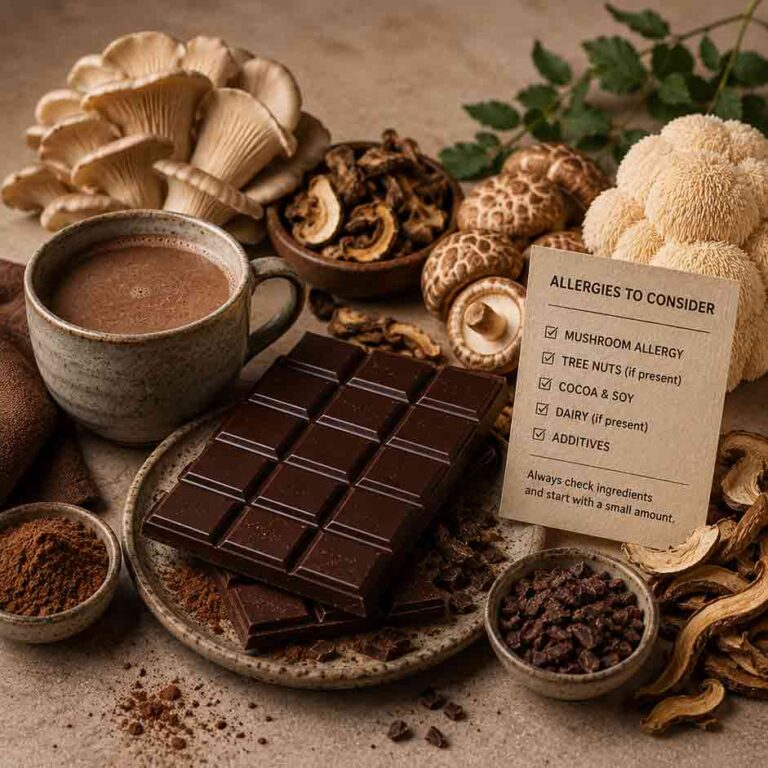
While psilocybin therapy expands one regulated clinic at a time, a completely different mushroom category has quietly become a mainstream consumer product. Functional mushrooms — species prized for compounds like beta-glucans, polysaccharides, and triterpenes rather than any psychoactive effect — have moved from health-food store shelves into Starbucks, Nestlé, and General Mills product lines.
The numbers reflect that shift. One widely cited estimate values the global functional mushroom market at $12.06 billion in 2025, projecting growth to $13.20 billion in 2026 and $20.74 billion by 2031, a compound annual growth rate of roughly 9.5%. Other estimates run higher, putting the 2026 global figure at $37.86 billion en route to nearly $85 billion by 2035, with a separate forecast projecting a 10.3% CAGR for 2026 through 2030 and North America posting the fastest regional growth. The spread between estimates reflects differences in what each report counts (supplements only versus supplements plus functional foods and beverages), but every major forecast agrees on the direction: fast, sustained growth.
Reishi currently leads the category, holding an estimated 21% to 36% of market share depending on the source, prized for immune and stress-related claims rooted in both traditional Chinese medicine and a growing body of clinical research. A 2024 randomized controlled trial found that reishi polysaccharide supplementation increased natural killer cell activity by 34% over eight weeks in healthy adults — a result that’s accelerated interest in the compound within integrative oncology settings.
Lion’s mane is the fastest-growing individual species, driven almost entirely by cognitive-health positioning. It’s being marketed as a natural nootropic for students, professionals, and aging adults, showing up in coffees, gummies, and ready-to-drink beverages. Lion’s mane gummies are reportedly the fastest-growing supplement subcategory, up 340% year over year, and cognitive-supplement-focused mushroom coffee brands — Mud\Wtr, Ryze, and Four Sigmatic among them — collectively generated an estimated $1.2 billion in 2025. It’s worth flagging, though, that the underlying science is thinner than the marketing suggests: research supporting lion’s mane’s cognitive benefits in humans remains limited, drawn mostly from small studies and animal models rather than large randomized controlled trials.
Cordyceps has carved out a sports-nutrition and energy niche, expanding at close to 10% CAGR as cultivated Cordyceps militaris — grown on grain substrate — replaces the far more expensive, wild-harvested Cordyceps sinensis traditionally used in Chinese medicine. Chaga holds a smaller but stable share built on antioxidant claims, and turkey tail’s PSK compound is gaining traction as an adjuvant therapy in integrative oncology protocols, though it isn’t a replacement for standard cancer treatment.
Regulatory clarity has helped fuel the category’s growth. In the US, functional mushroom supplements fall under the Dietary Supplement Health and Education Act (DSHEA), which offers a far lighter compliance path than pharmaceutical regulation — no FDA pre-approval is required before a product reaches shelves, though manufacturers are still expected to follow 21 CFR Part 111 manufacturing standards. In 2025, the US Pharmacopeia published quality monographs for reishi and lion’s mane covering identity, purity, and potency, which should reduce adulteration risk industry-wide. The European Food Safety Authority issued its own 2025 guidance on acceptable beta-glucan content claims, giving brands targeting EU markets clearer rules to build against.
Where the Two Fungi Categories Actually Intersect
The honest answer is: barely, and mostly in branding rather than substance. A can of mushroom coffee and a licensed psilocybin session sit at opposite ends of the regulatory spectrum. One requires no prescription, no facilitator, and no state license — you can buy it online today, anywhere in the US, and it contains no controlled substance. The other requires a state-licensed facility, a trained facilitator, a health screening, and, in most states, is still entirely unavailable.
The overlap that does exist is cultural rather than regulatory. Consumer comfort with “adaptogenic” and “functional” mushroom branding — built by the reishi-and-lion’s-mane wellness boom — has arguably softened public attitudes toward mushrooms as a category generally, which some public-health researchers believe has contributed to voter support for psilocybin ballot measures in Oregon and Colorado. But that’s a hypothesis about sentiment, not a regulatory or pharmacological connection. Confusing the two products in a marketing or educational context isn’t just imprecise — it risks a genuine safety problem, since consumers who assume “mushroom supplement” rules apply to psilocybin, or vice versa, could seriously misjudge legal risk or physiological effects.
Costs, Risks, and Access Barriers
Neither side of this story is friction-free. On the psilocybin side, the barriers are cost, geography, and screening. A single legal session can run into the thousands of dollars, entirely out of pocket in the near-total absence of insurance coverage. Geography compounds the cost problem: unless you live in Oregon, Colorado, or (soon) New Mexico, legal access means travel, and even within those states, county-level opt-outs in Oregon mean the nearest licensed center may be hours away. Screening protocols exist precisely because psilocybin carries real psychiatric risk for some people, particularly those with a personal or family history of psychosis, and legitimate facilitators treat that screening as non-negotiable rather than a formality to work around.
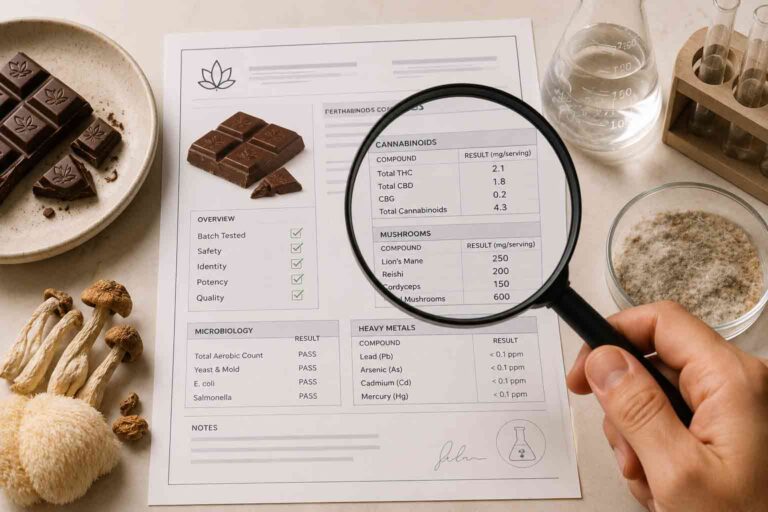
On the functional mushroom side, the risk profile is different but not zero. Because DSHEA doesn’t require FDA pre-market approval, product quality varies significantly between brands, and the “highly sought after” 100%-fruiting-body, no-filler labeling language that’s become common in marketing exists precisely because mycelium-on-grain products — bulked up with starch — have been a documented adulteration problem in the category. The new USP monographs should help, but they’re voluntary quality standards, not enforcement mechanisms, and consumers still need to do some homework on sourcing and third-party testing before assuming a label’s claims are accurate.
What to Watch Through 2027
A handful of near-term events will likely determine how fast both trends keep moving. Compass Pathways’ COMP360 FDA decision, expected late 2026 or early 2027, is the single biggest catalyst on the psilocybin side — approval would create the first FDA-sanctioned medical use for psilocybin and would almost certainly accelerate state-level legislative momentum and, eventually, insurance conversations. Minnesota’s bill, South Dakota’s newly passed legislation, and New Jersey’s hospital pilot are all worth tracking as tests of models that differ meaningfully from Oregon’s and Colorado’s service-center approach. Colorado has also signaled a phased expansion beyond psilocybin: DMT, ibogaine, and mescaline could become available through the healing-center system after June 1, 2026, pending regulatory action.
On the functional mushroom side, the story is less about a single regulatory trigger and more about steady institutionalization — quality standards maturing, big food and beverage brands continuing to fold mushroom extracts into mainstream product lines, and the market simply continuing to compound at the high single digits or low double digits most analysts project through the early 2030s.
Frequently Asked Questions
Is psilocybin legal in the US in 2026?
No, not at the federal level — psilocybin remains a Schedule I controlled substance nationwide. It’s legally available through licensed therapy programs in three states: Oregon, Colorado, and (as its program comes online) New Mexico. Personal possession is also decriminalized in Colorado under Proposition 122.
Are functional mushrooms like lion’s mane and reishi legal everywhere?
Yes. Functional mushrooms are non-psychoactive and regulated as dietary supplements under DSHEA, so they’re legal to buy, sell, and use nationwide, with no state-level restrictions comparable to psilocybin.
What’s the difference between functional mushrooms and magic mushrooms?
Functional mushrooms — reishi, lion’s mane, cordyceps, chaga, turkey tail, shiitake — contain no psilocybin and produce no psychoactive effects; their compounds (beta-glucans, polysaccharides, triterpenes) are studied for immune, cognitive, and antioxidant support. “Magic mushrooms” refers specifically to psilocybin-containing species, which are federally controlled and psychoactive.
How much does legal psilocybin therapy cost?
In Colorado, a single licensed session typically runs $1,500 to $4,500, with full treatment plans reaching $3,500 to $9,500. Costs are almost entirely out-of-pocket, since most insurers don’t cover psilocybin services due to its federal Schedule I status.
Do you need to live in Oregon or Colorado to access legal psilocybin therapy?
No. Neither state has a residency requirement, and both were designed to accommodate out-of-state participants, though you’ll need to travel there for the supervised session itself.
When might the FDA approve a psilocybin-based medication?
Compass Pathways’ COMP360, a synthetic psilocybin for treatment-resistant depression, is expected to reach an FDA decision in late 2026 or early 2027. That would be the first FDA-approved psilocybin-based treatment, though it wouldn’t change psilocybin’s underlying Schedule I status for non-medical use.
The Bottom Line
Legal psychedelics and functional fungi are two distinct stories that happen to be unfolding at the same cultural moment. Psilocybin therapy is real, but it’s narrow — three states, thousands of dollars per session, and a federal legal status that hasn’t budged. Functional mushrooms are the opposite: fully legal everywhere, inexpensive, and already sitting in mainstream grocery aisles, even if some of the cognitive-health marketing runs ahead of the clinical evidence. Understanding which “legal mushroom” story you’re actually reading about — and checking sources before acting on either one — matters more than ever as both categories keep growing through 2026 and beyond.
This article is for informational purposes only and does not constitute medical or legal advice. Psilocybin remains illegal under federal law outside licensed state programs; laws vary by state and change frequently. Consult a licensed healthcare provider and verify current state law before pursuing psilocybin therapy, and consult a physician before adding any new supplement, including functional mushrooms, especially if you take prescription medications or have an underlying health condition.
Sources
- Psilocybin Therapy Legal States 2026 — Psychedelic Beacon
- Psilocybin Legal Status 2026: US States & Countries Guide — MycoMeditations
- Where Is Psilocybin Legal in the U.S.? A State-by-State Guide (2026) — Front Range Treatment Center
- Psilocybin Legal Status by State and Federal Law — Recovered.org
- Psychedelics Legalization & Decriminalization Tracker — Psychedelic Alpha
- Psilocybin Therapy in Colorado for Out-of-State Clients — Front Range Treatment Center
- Colorado Psilocybin Healing Centers & Retreats — Psychedelic Beacon
- Psychedelic Legal Status by State 2026: Psilocybin, MDMA & DMT — Mind Medicine Law
- State Policies Supporting Evidence-Based Therapeutic Psilocybin Use — ASTHO
- Law and Policy Map — UC Berkeley Center for the Science of Psychedelics
- Functional Mushroom Market Size, Share Report, 2026–2033 — Grand View Research
- Functional Mushroom Market Size, Growth, Share & Report Analysis 2031 — Mordor Intelligence
- Functional Mushroom Market Size | Growth Report [2034] — Fortune Business Insights
- Global Medicinal Mushroom Market Size & Forecast, 2026–2033 — Coherent Market Insights
- Functional Mushroom Market Growth Analysis — Technavio
- Functional Mushroom Market Size to Hit USD 84.78 Billion by 2035 — Precedence Research
- Functional Mushroom Supplements Market Research Report 2033 — DataIntelo
- Mushroom Extracts Market Size, Share, Growth Report, 2030 — Grand View Research
- Functional Mushroom Foods Hit $8 Billion Market — Food Wired Daily
- Medicinal Mushroom Market Size, Share, Growth, Trends — Business Research Insights
All sources accessed and verified as of July 2, 2026.