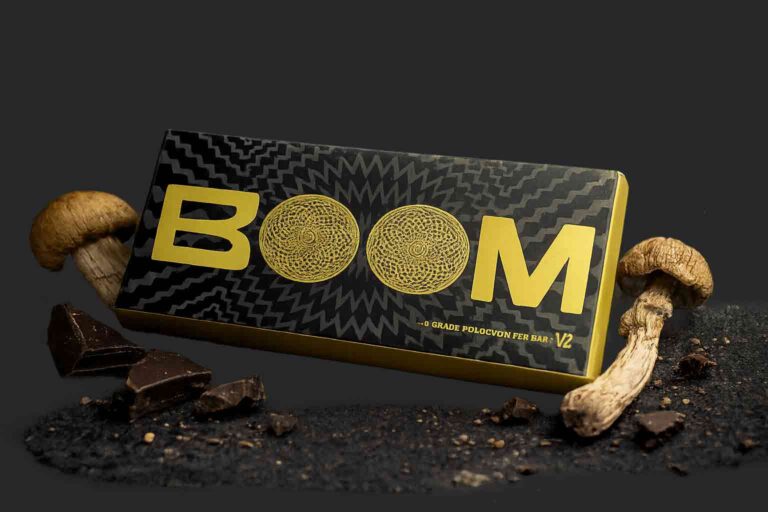
Quick answer: Most functional mushrooms — lion’s mane, reishi, cordyceps, and chaga — do not appear to cause pharmacological tolerance the way stimulants or classic herbal adaptogens can. There is no published human evidence showing that your body “gets used to” them in a way that blunts their effect. Cycling isn’t required for tolerance reasons. It can still be worth doing for other reasons: cost, variety, allergy risk, and — specifically for reishi — long-term liver monitoring.
That’s the one-sentence version. Here’s the reasoning behind it, what the research actually says species by species, and a practical framework for deciding what to do with your own routine.
Why This Question Comes Up
Functional mushroom chocolate has become one of the more popular delivery formats for adaptogenic supplementation — easier to dose consistently than a tincture, more palatable than a powder stirred into coffee. People who eat it daily for a few weeks often notice the same thing that happens with coffee, melatonin, or a new pair of running shoes: the effect that felt noticeable at first starts to feel routine.
That shift gets interpreted as tolerance. It’s a reasonable question to ask, especially if you’ve read supplement blogs recommending “5 days on, 2 days off” cycles for adaptogens in general, without much distinction between herbs like rhodiola and mushrooms like reishi. The two categories get lumped together constantly in wellness content, but the biology behind them is different enough that the same cycling advice doesn’t automatically transfer.
What “Tolerance” Actually Means
In pharmacology, tolerance describes a specific mechanism: repeated exposure to a compound causes the body to down-regulate the receptors or pathways that compound acts on, so the same dose produces a smaller effect over time. This is well documented for things like opioids, benzodiazepines, caffeine, and THC — substances that bind directly to specific receptors and trigger a predictable, escalating adaptation response.
Functional mushrooms work through a different set of mechanisms. Lion’s mane’s most-studied compounds, hericenones and erinacines, are believed to stimulate nerve growth factor production rather than bind to a single receptor type. Reishi’s triterpenes and beta-glucans act on immune signaling and stress-response pathways in a modulatory, gradual way. None of these mechanisms match the receptor-downregulation pattern that defines classic pharmacological tolerance, and no human trial has reported diminishing biological response to continued use.
That distinction matters for the article’s central question: the felt sense that “it’s not doing much anymore” is more likely explained by habituation (you stop noticing a subtle, steady effect once it becomes your baseline) than by your body neutralizing the compound.
The Case Against Cycling Functional Mushrooms
A few threads of evidence point the same direction:
No tolerance mechanism has been identified. Functional mushrooms are generally described as supporting the body’s regulatory systems rather than introducing a foreign compound the body needs to counteract, which is part of why several supplement educators explicitly argue that cycling isn’t necessary for this category, unlike some other adaptogens.
Human trials use continuous daily dosing without reporting fading effects. In one double-blind pilot study on lion’s mane, researchers gave participants Hericium erinaceus for both an acute (single-day) and a chronic (weeks-long) period to separately measure short-term and longer-term cognitive and mood effects — a design that assumes, and doesn’t contradict, sustained daily response. Other trials cited by health researchers have run 4 to 16 weeks of continuous daily supplementation, including an 8-week trial in overweight adults and a 4-week trial in menopausal women, both reporting continued mood benefits through the end of the study rather than a plateau followed by decline.
Traditional use patterns were daily, not cyclical. In Traditional Chinese Medicine, reishi was used as a long-term daily tonic, cordyceps as a stamina support taken through demanding seasons, and lion’s mane as an ongoing cognitive aid — not as short pulses with scheduled breaks. That’s not scientific proof of anything on its own, but it does undercut the idea that cycling is an ancient, universally observed practice for this specific category of mushroom.
Where the Cycling Advice Actually Comes From
The “cycle your adaptogens” recommendation is real, widely repeated, and worth taking seriously — it’s just aimed primarily at a different group of plants. Herbs like rhodiola, ashwagandha, ginseng, and eleuthero interact more directly with the HPA axis and, in rhodiola’s case, with MAO-inhibiting activity. Practitioners suggest schedules like five days on and two off, or several weeks on followed by a week off, as a way to prevent the body from adapting to a more stimulant-like or hormonally active input.
Even for those herbs, the evidence base is thin. A 2026 review of adaptogen research concluded that cycling guidance varies by herb and isn’t firmly established in human randomized controlled trials — the five-days-on/two-off pattern for rhodiola, for example, is a practitioner heuristic that no trial has directly tested. A separate analysis of adaptogen timing research reached the same conclusion: specific on/off schedules are commonly recommended but not validated in clinical trials, and no studies have compared outcomes between continuous and cycled dosing head-to-head.
Functional mushrooms often get pulled into this same blanket advice because they’re marketed alongside rhodiola and ashwagandha in “adaptogen stack” products, not because they share the same mechanism. Some herbalists still recommend rotating mushrooms seasonally or every six months, but the stated reasoning tends to be about variety and matching supplementation to seasonal needs, rather than about preventing a measurable drop in effectiveness.
Species-by-Species: What the Evidence Actually Supports
Lion’s Mane (Hericium erinaceus)
Lion’s mane has the most consistent human research behind it among the functional mushrooms, generally centered on cognitive processing speed, mood, and stress. Reported side effects are mild and infrequent — some GI discomfort in a small percentage of users — and no liver toxicity has been documented. Nothing in the available trial data suggests a fading response with continued use; if anything, several studies enrolled participants for chronic (multi-week) dosing specifically because the cognitive and mood effects were expected to build over time rather than appear and then decline.
Reishi (Ganoderma lucidum / lingzhi)
Reishi is the one species where “should I take a break” has a real answer, but it’s a liver-safety question rather than a tolerance question. Reishi is generally well tolerated — one survey of over 1,300 users found roughly 9% reporting side effects, mostly dry mouth and constipation — but it also has a documented, if rare, association with drug-induced liver injury, including case reports of acute hepatitis and at least one fatal case tied to long-term powdered reishi use. The NIH’s LiverTox database notes that reishi-related liver injury is typically self-limited and hasn’t been shown to cause chronic damage, but flags it as a recognized cause of supplement-induced liver injury nonetheless.
Extract forms appear to carry a different risk profile than raw powdered fruiting body: medical reference sources note that reishi extract may be reasonably safe for up to a year of use, while powdered reishi taken for more than a month has been linked to a higher liver-injury signal. Risk rises further with concurrent alcohol use, existing liver conditions, or use of blood thinners, since reishi also has antiplatelet activity. For reishi specifically, periodic breaks and, ideally, occasional liver-enzyme checks during extended use are a reasonable precaution — not because the mushroom stops working, but because prolonged uninterrupted exposure is the pattern most associated with the rare injury cases on record.
Cordyceps
Cordyceps has the strongest human evidence for a specific, measurable outcome: exercise tolerance and ventilatory threshold. Some adaptogen-focused guides that recommend cycling for rhodiola explicitly note that cordyceps can be run continuously without the same rationale for breaks, since its effects on endurance appear to depend on steady accumulation rather than an acute, escalating response.
Chaga
Chaga has the thinnest human evidence of the four, with most support still coming from animal and in vitro studies rather than clinical trials. That’s a reason for modest expectations and quality sourcing, not a reason to cycle it specifically for tolerance — there’s simply not enough tolerance-relevant human data either way.
When Cycling Still Makes Sense — Just Not for “Tolerance”
Skipping the tolerance-based cycling doesn’t mean daily, indefinite, no-questions-asked use is automatically the right call either. A few legitimate reasons to build in breaks or rotation:
- Reishi liver monitoring. As covered above, this is the one species where periodic breaks and awareness of alcohol interaction and total duration are genuinely supported by the safety literature, independent of any tolerance question.
- Allergy and sensitization risk. People with mold or fungal sensitivities can develop or worsen reactions to repeated mushroom exposure over time — a different phenomenon from pharmacological tolerance, but a real reason some people rotate species or pause use.
- Medication interactions. Reishi’s antiplatelet effect and potential interaction with blood thinners or immunosuppressants, and general caution around any supplement before surgery, are reasons for planned pauses that have nothing to do with fading efficacy.
- Cost and habit fatigue. Practical, not biological — some people simply prefer not to run any supplement indefinitely, and rotating between lion’s mane, reishi, and cordyceps chocolate by desired effect (focus vs. calm vs. stamina) can keep a routine sustainable without any tolerance rationale at all.
- Reassessing whether it’s still doing anything. If the subjective effect has faded, a short break followed by reintroduction is a reasonable way to re-notice a real effect versus confirm it was mostly novelty. This is a self-experimentation tool, not evidence that a break was pharmacologically necessary.
A Practical Framework
Rather than a fixed on/off calendar borrowed from stimulant-adaptogen protocols, a more evidence-consistent approach for functional mushroom chocolate looks like this:
- Default to consistent daily use. The clinical trials showing benefit for lion’s mane, reishi, and cordyceps used continuous daily dosing for 4 to 16 weeks; that’s the pattern with evidence behind it.
- Give it real time before judging. Multiple sources note that functional mushroom benefits accumulate over weeks, not days — a two-week trial isn’t a fair test, and neither is stopping after ten days because nothing dramatic happened.
- Make reishi the exception. If reishi is a regular part of your routine, especially in powdered rather than extract form, build in periodic breaks, avoid pairing it with regular alcohol use, and talk to a doctor if you’re on blood thinners, have liver disease, or plan any use beyond several months.
- Watch for allergy or GI signals, not “fading effects.” Rashes, respiratory symptoms, or persistent stomach pain are reasons to stop and consult a doctor. A subjectively quieter effect after a few weeks is not the same signal and doesn’t require the same response.
- Choose third-party tested products. Given how much extract quality and standardization vary across the functional mushroom category, product quality is a bigger variable in outcomes than any cycling schedule.
Frequently Asked Questions
Does the body build tolerance to functional mushroom chocolate?
No published human research shows pharmacological tolerance to lion’s mane, reishi, cordyceps, or chaga. These mushrooms work through gradual, modulatory pathways rather than the receptor-based mechanisms that produce classic tolerance, and clinical trials using continuous daily dosing for 4 to 16 weeks have not reported a fading effect.
Do I need to cycle lion’s mane?
There’s no tolerance-based reason to cycle lion’s mane. Human trials have used continuous dosing for weeks at a time without reporting diminished response, and reported side effects are mild and infrequent.
Why does reishi need breaks but not lion’s mane?
Reishi carries a rare but documented risk of liver injury with prolonged, especially powdered, use — a safety consideration, not a tolerance one. Lion’s mane has no comparable liver-toxicity signal in the available case-report or trial literature.
Is cycling adaptogens scientifically proven?
No. Reviews of the adaptogen literature describe cycling schedules like “5 days on, 2 days off” as practitioner heuristics that haven’t been tested in randomized controlled trials, even for herbs like rhodiola where the practice is most commonly recommended.
How long before functional mushrooms start working?
Most sources describe a build-up period of two to eight weeks of consistent use before effects become noticeable, with some trials running as long as 16 weeks to capture chronic benefits.
Can I take reishi and lion’s mane together every day?
Research supports combining adaptogenic herbs and mushrooms, though it’s worth checking for medication interactions individually — particularly with reishi, given its effect on blood clotting and blood sugar.
The Bottom Line
If the question is specifically “am I building tolerance to my mushroom chocolate,” the honest answer based on current evidence is: probably not, and there’s no clinical signal that you need to cycle it to keep it working. The exception is reishi, where periodic breaks are a reasonable precaution for liver safety rather than a fix for a fading effect. For lion’s mane and cordyceps, and for chaga within the limits of its thinner evidence base, consistent daily use is the pattern the actual research has tested — not the 5-on/2-off habit borrowed from a different category of adaptogens entirely.
As with any supplement, this isn’t medical advice for your specific situation. If you’re on medication, pregnant or breastfeeding, managing a liver or bleeding condition, or planning surgery, talk to a doctor before starting or continuing any functional mushroom product.
Sources
- Docherty, S., Doughty, F. L., & Smith, E. F. (2023). The Acute and Chronic Effects of Lion’s Mane Mushroom Supplementation on Cognitive Function, Stress and Mood in Young Adults. Nutrients. https://www.ncbi.nlm.nih.gov/pmc/articles/PMC10675414/
- LiverTox: Clinical and Research Information on Drug-Induced Liver Injury — Lingzhi, Reishi. National Institute of Diabetes and Digestive and Kidney Diseases, NIH. https://www.ncbi.nlm.nih.gov/books/NBK609014/
- Reishi Mushroom Toxicity in Chronic Liver Disease. American College of Gastroenterology Journal. https://journals.lww.com/ajg/fulltext/2025/10002/s5504_reishi_mushroom_toxicity_in_chronic_liver.5503.aspx
- Ganoderma lingzhi (Reishi Mushroom)-Induced Acute Liver Injury in the Setting of Alcohol Use: A Case Report and Review of the Literature. NCBI PMC. https://www.ncbi.nlm.nih.gov/pmc/articles/PMC10599861/
- Reishi — Special Subjects. Merck Manual, Professional and Consumer Editions. https://www.merckmanuals.com/professional/special-subjects/dietary-supplements/reishi | https://www.merckmanuals.com/home/special-subjects/dietary-supplements-and-vitamins/reishi
- Adaptogens Explained: The Honest 2026 Guide to What Works, What’s Hype, and What’s Risky. Useful Vitamins. https://usefulvitamins.com/complete-guide-to-adaptogens/
- Best Time to Take Adaptogens: HPA Axis, Cortisol & Rhythm. Biochron. https://www.biochron.net/en/best-time-to-take-adaptogens-post1098
- List of Adaptogens: Best Herbs & Mushrooms for Stress, Energy & Focus. Mind Lab Pro. https://www.mindlabpro.com/blogs/nootropics/list-of-adaptogens
- The Myth of Cycling Functional Mushrooms. Gribb. https://gribbworld.com/blogs/news/the-myth-of-cycling-functional-mushrooms
- What Are Adaptogenic Mushrooms? Benefits, Risks, and Types. Healthline. https://www.healthline.com/nutrition/adaptogenic-mushrooms
- Mushroom Supplements: Benefits, Risks & More. Forbes Health. https://www.forbes.com/health/supplements/mushroom-supplement/
- Reishi Mushroom: Benefits, Forms, Dosing, and Side Effects. Dr. Brad Stanfield. https://drstanfield.com/blogs/articles/reishi-mushroom-benefits-forms-dosing-and-side-effects
Educational content only, not medical advice. Consult a healthcare provider before starting any new supplement, particularly if you take medication, have a liver or bleeding condition, or are pregnant or breastfeeding.