Key Takeaways
- Medicinal mushrooms have a documented history spanning at least 2,000 years in Chinese pharmacopoeia, with oral traditions extending to approximately 2700 BCE.
- The Shennong Ben Cao Jing — China’s earliest known pharmacopoeia, compiled during the Han Dynasty (circa 200 CE) — classified Reishi (lingzhi) as a “noble herb” alongside ginseng.
- Modern science has identified over 150 bioactive compounds in medicinal mushrooms, including beta-glucans, polysaccharides, and triterpenes, with clinical research now validating many traditional claims.
- The global medicinal mushroom market was valued at approximately $9.33 billion in 2024 and is projected to reach $29.90 billion by 2034, growing at a CAGR of 12.35% (Towards FnB / Precedence Research, 2025).
- Key species — Reishi, Lion’s Mane, Chaga, Cordyceps, Turkey Tail, and Shiitake — each carry distinct historical, cultural, and pharmacological profiles.
- Regulatory approval is accelerating: in April 2025, the U.S. FDA granted GRAS (Generally Recognized as Safe) status to several medicinal mushroom extracts including Reishi, Cordyceps, and Chaga.
What Are Medicinal Mushrooms, and Why Do They Matter Now?
Medicinal mushrooms are specific fungi species recognized for their therapeutic properties beyond basic nutrition. Unlike ordinary culinary varieties, these fungi contain bioactive compounds — particularly beta-glucans, polysaccharides, and triterpenoids — that appear to influence immune, neurological, and metabolic pathways in the human body.
They are not a modern wellness trend. They are, in fact, one of the oldest documented therapeutic tools in human history — used across East Asian civilizations for millennia before they ever appeared on a health store shelf.
Today, the convergence of traditional knowledge and modern pharmacology is generating significant scientific and commercial momentum. As clinical researcher and nutrition scientist Dr. Wiegand noted in a December 2025 review published by Vice, researchers have identified “a variety of potentially meaningful compounds, like beta-glucans, triterpenes, polysaccharides, and other bioactives, that appear to influence immune, neurological, and metabolic pathways.” That language — careful, evidence-based, but genuinely optimistic — captures exactly where the science stands.
This article traces the full arc: from the mythological origins in ancient China, through the pharmacological discoveries of the 20th century, to the multi-billion-dollar global industry shaping what’s in your supplement cabinet today.
Ancient Origins — The Chinese Medicinal Tradition
The Legend of Shennong and the First Pharmacopoeia
The origin story of medicinal mushrooms in China begins with a semi-divine figure: Shennong (神农), the “Divine Farmer,” who is said to have lived from approximately 2737 to 2697 BCE. According to tradition, Shennong systematically tasted hundreds of plants and fungi daily to identify their medicinal properties — reportedly testing around 100 substances per day — and transmitted this knowledge orally across generations.
That oral tradition was eventually codified in one of the most consequential documents in medical history: the Shennong Ben Cao Jing (神農本草經), or Classic of the Materia Medica. Compiled during the Han Dynasty (circa 200 CE), the text is composed of three volumes cataloguing 365 medicinal substances — including minerals, animals, and plants. Its first volume, dedicated to substances “harmless to humans,” listed the most elite therapeutic agents as “noble herbs” (上品). Among them: lingzhi (Reishi), ginseng, jujube, and cinnamon.
Of Reishi, the text recorded: “If eaten customarily, it makes your body light and young, lengthens your life, and turns you into one like the immortal who never dies.” That quote — attributed to the pharmacopoeia tradition — establishes Reishi not merely as a remedy, but as a symbol of longevity and spiritual attainment in Chinese culture.
Educational Reference: Shennong Ben Cao Jing is classified among the 10 premodern classics of Chinese medicine designated as national priorities by the People’s Republic of China. It remains one of the foundational texts of Traditional Chinese Medicine (TCM). (Source: The Divine Farmer’s Materia Medica, translated edition, Blue Poppy Press)
Reishi (Lingzhi): The Mushroom of Immortality
Ganoderma lucidum — known in Chinese as lingzhi (灵芝), meaning “spiritual/miraculous mushroom” — represents the best-documented case of a medicinal mushroom in classical Chinese texts.
Its earliest textual references date to over 2,000 years ago, and ancient carvings, paintings, and decorative furniture featuring Reishi imagery have been discovered from the same period. The mushroom also appears prominently in Taoist art and philosophy, where it symbolizes the alignment of Qi (vital life force), spiritual harmony, and physical immortality.
Because Reishi was extremely rare in nature, it was largely reserved for emperors, nobles, and high-ranking Taoist practitioners. The statues of China’s ancient emperors Yan and Huang — revered founding figures — depict them holding Reishi, signaling how deeply embedded the mushroom was in the imperial imagination of health and power.
Traditional Chinese Medicine (TCM) practitioners used Reishi to:
- Balance Qi and influence the heart, lungs, liver, and kidney channels
- Calm the mind and reduce anxiety
- Relieve cough and respiratory conditions
Reishi was formally included in China’s State Pharmacopoeia of the People’s Republic of China in the year 2000 — a modern regulatory document that still references its traditional indications of Qi balance, mind-easing, and respiratory support.
Shiitake (Lentinus edodes): From Forest Floor to Imperial Table
The Shiitake mushroom (Lentinus edodes) has a cultivation history stretching back to approximately 1000 CE, when Chinese growers developed techniques for cultivating it on logs — the beginning of what would become a massive agricultural tradition. In China, the finest Shiitake varieties were known as shanku and dongo; in Japan, the premium grade was called donko.
Shiitake’s place in TCM rested on its ability to strengthen the immune system, improve circulation, and support overall vitality. It was used to address conditions ranging from fatigue and poor appetite to respiratory complaints — a range of applications now partially supported by its known constituent, lentinan, a beta-1,3-glucan that has been studied in Japan as an adjunct cancer therapy since the 1980s.
Lion’s Mane (Hericium erinaceus): The Mountain Priest
Long before Lion’s Mane appeared in wellness cafes and nootropic stacks, it was known in Asian traditional medicine as the “Mountain Priest” — a tribute to its shaggy, white, cascading appearance and its association with mental clarity and spiritual practice. TCM practitioners historically used it for digestive complaints and cognitive support, and Buddhist monks reportedly used Lion’s Mane powder as a tea to enhance focus during meditation.
The mushroom’s two primary neuroactive compounds — hericenones (from the fruiting body) and erinacines (from the mycelium) — are now among the most studied substances in neurological wellness research, decades after traditional practitioners first intuited the mushroom’s connection to cognitive function.
Beyond China — Medicinal Mushrooms Across Cultures
Tibet and the Cordyceps Tradition
Cordyceps (Ophiocordyceps sinensis) has an unusual origin story: it is a parasitic fungus that grows on the larvae of ghost moths at high altitudes in the Tibetan Plateau and Himalayan regions. Yak herders in Tibet observed that their animals became unusually energetic and strong after grazing on patches where the fungus grew — and this empirical observation led to centuries of use in Tibetan and Chinese highland medicine for improving stamina, vitality, and respiratory function.
Historically documented in Tibetan medical texts from the 15th century, Cordyceps was so prized that it commanded extraordinary prices — harvested wild Cordyceps could fetch more per gram than gold in certain Chinese markets. It was prescribed for fatigue, impotence, and weakness, particularly in elderly patients recovering from chronic illness.
Modern research confirms its mechanism: Cordyceps increases cellular ATP (adenosine triphosphate) production and enhances oxygen utilization, providing a plausible biochemical explanation for the energy and endurance effects reported across centuries.
Russia and the Chaga Tradition
Chaga (Inonotus obliquus) grows on birch trees across Siberia, Northern Europe, and parts of North America. In Russia and Scandinavia, it has been used as a folk remedy for centuries — brewed into teas to address stomach complaints, cancer prevention, and immune strengthening.
The modern scientific chapter of Chaga began in the 1950s, when the Moscow Medical Institute began conducting clinical trials. By 1955, the Russian Medical Academy of Science formally recognized Chaga as a medical treatment — one of the earliest instances of a medicinal mushroom gaining institutional regulatory status in the 20th century.
The story reached the Western world largely through literature: Alexander Solzhenitsyn, the Nobel Prize-winning author, described Chaga’s healing properties extensively in his 1968 novel The Cancer Ward — introducing the mushroom’s therapeutic tradition to readers far outside Soviet Russia.
Japan and the Formalization of Mushroom Medicine
Japan played a critical role in translating traditional mushroom use into modern pharmacology. Building on centuries of mushroom cultivation and TCM-derived knowledge, Japanese researchers in the 1970s and 1980s isolated and characterized several key bioactive compounds:
- Lentinan (from Shiitake) — approved in Japan in 1985 as an adjunct treatment for gastric cancer
- Polysaccharide-K (PSK) from Turkey Tail (Trametes versicolor) — approved in Japan and used alongside chemotherapy for colorectal, gastric, and lung cancers
- Schizophyllan (from Schizophyllum commune) — studied for cervical cancer adjunct therapy
Japan’s regulatory approval of mushroom-derived cancer adjuvants established the first formal bridge between ethnomycology (traditional mushroom knowledge) and pharmaceutical oncology.
The Science — What Modern Research Has Found
The Bioactive Compounds Behind the Benefits
The therapeutic effects of medicinal mushrooms are attributed primarily to several classes of bioactive molecules:
| Compound Class | Primary Sources | Researched Effects |
|---|---|---|
| Beta-glucans | Reishi, Chaga, Turkey Tail, Shiitake | Immune modulation, anti-fatigue |
| Polysaccharides | Most medicinal species | Anti-inflammatory, antioxidant |
| Triterpenes/Triterpenoids | Reishi (ganoderic acids) | Liver support, anti-inflammatory |
| Erinacines & Hericenones | Lion’s Mane | Nerve Growth Factor (NGF) stimulation |
| Cordycepin | Cordyceps | ATP production, anti-fatigue |
A 2025 systematic review and meta-analysis published in the European Journal of Clinical Nutrition (Muroya et al., University of Tsukuba, Japan) — analyzing 16 randomized controlled trials encompassing 1,449 participants — investigated the effects of beta-glucans on fatigue and mood states. The review found consistent evidence of anti-fatigue effects in healthy subjects, providing one of the first meta-analytic confirmations of what traditional practitioners had observed for centuries.
Lion’s Mane and Cognitive Health
Lion’s Mane has attracted particular scientific attention for its potential neuroprotective effects. Its unique compounds — erinacines and hericenones — are among the few known natural substances that stimulate production of Nerve Growth Factor (NGF), a protein critical for the growth and maintenance of neurons.
A randomized, double-blind placebo-controlled trial by Li et al. (2020) of 49 patients with mild Alzheimer’s disease found that treatment with Lion’s Mane mycelia (1,050 mg daily, containing 5 mg/g erinacine A) for 49 weeks significantly improved Instrumental Activities of Daily Living (IADL) scores compared to placebo — though no significant effects were seen for MMSE cognitive function tests, indicating the evidence remains promising but requires more large-scale trials.
A 2024 analysis found that Lion’s Mane supplementation helped boost cognition and energy in older adults — consistent with earlier findings from Nagano et al. (2010), which reported improvements in depression, sleep quality, and menopausal complaints in women consuming Lion’s Mane cookies for four weeks.
As of early 2026, at least one major active clinical trial (Applied Food Sciences / Center for Applied Health Sciences, NCT07405957) is examining Lion’s Mane’s effects on cognitive performance, gut microbiota, and serum biomarkers in healthy adults over a 45-day randomized controlled protocol.
Reishi and Immune Support
A 2024 study published in Integrative Medicine Research analyzed data from 1,374 cancer patients and survivors using Reishi mushroom products. More than half of respondents reported substantial improvements in cancer-related symptoms including nausea, fatigue, poor appetite, depression, and drowsiness. Approximately 9% reported adverse effects — notably dry mouth, constipation, insomnia, and skin irritation — underscoring the importance of qualified guidance when using Reishi alongside conventional cancer treatment.
Reishi contains over 400 identified bioactive compounds, including ganoderic acids (triterpenoids) with documented anti-inflammatory and hepatoprotective properties. Mushroom expert Zhi-Bin Lin, writing in a review of modern pharmacological studies, notes that Reishi’s cardiovascular support potential could relate to the “heart-boosting” effects recorded in classical TCM texts — a remarkable continuity between ancient observation and contemporary pharmacology.
Turkey Tail and the Gut-Immune Connection
Trametes versicolor (Turkey Tail) contains Polysaccharide-K (PSK) and Polysaccharide-P (PSP), both of which have been studied extensively for immunomodulatory effects. PSK remains one of the few mushroom-derived compounds with full pharmaceutical approval — used in Japan since 1985 as an adjunct therapy alongside chemotherapy.
Emerging 2025 research is also exploring Turkey Tail’s prebiotic potential: its beta-glucans appear to selectively feed beneficial gut bacteria (particularly Lactobacillus and Bifidobacterium species), suggesting a role in the gut-immune axis that complements its classical immunomodulatory profile.
What the Science Can and Cannot Claim
Honesty matters here. As PeakBridge VC noted in a September 2025 investment analysis, “clinical validation is in initial stages, with several human trials exploring therapeutic effects of species like Lion’s Mane, Reishi, and Cordyceps on cognition, immunity, and metabolic health. Some randomized studies do report cognitive benefits, reductions in blood glucose, and immunomodulatory effects. Yet widespread clinical adoption is being slowed by funding limitations, inconsistent standardization, and variability in the content of bioactive compounds.”
The distinction between a traditional food, a nutraceutical, and a pharmaceutical drug matters enormously — both legally and clinically. Medicinal mushrooms are not FDA-approved drugs for the treatment of any disease. What they represent is a category of functional food ingredients with a rich evidence base for safety and a growing — though still preliminary — evidence base for specific therapeutic effects.
From Traditional Remedy to Global Industry
The 20th-Century Transition: Cultivation at Scale
The shift from wild-harvested rarity to commercially available product began in earnest in the mid-20th century, driven primarily by Japanese and Chinese agricultural scientists who developed reliable cultivation techniques for species previously difficult to grow outside their natural habitats.
Paul Stamets, the American mycologist and founder of Fungi Perfecti (established 1980), played a seminal role in introducing medicinal mushrooms to Western audiences through rigorous cultivation methods, public-facing education, and peer-reviewed research collaboration. His 1993 book Growing Gourmet and Medicinal Mushrooms became a foundational text for the English-language mushroom cultivation movement.
The 1990s saw the first wave of Western supplement brands bringing Reishi, Shiitake, and Cordyceps to health food stores — initially marketed to consumers already familiar with herbal medicine and East Asian wellness traditions. The products were niche, the market was small, and clinical backing was sparse.
That changed significantly in the 2000s and 2010s.
The Wellness Boom and the Rise of Functional Mushrooms
Between 2015 and 2020, medicinal mushrooms shifted from health food store specialty items to mainstream wellness category. Several converging forces drove this:
- Social media and influencer culture introduced millions of consumers to Lion’s Mane for “brain fog,” Reishi for stress, and Cordyceps for athletic performance.
- The functional beverage trend produced mushroom coffees, teas, and lattes from brands including Four Sigmatic, Mud/Wtr, and RYZE — bringing mushroom extracts to consumers who had never visited a health food store.
- Increasing access to scientific literature allowed health-conscious consumers to read actual studies — not just marketing claims — building sophisticated demand for quality-tested products.
- The global pandemic (2020) accelerated interest in immune support, bringing an unprecedented number of new consumers to mushroom supplements.
The Market Today: A Multi-Billion Dollar Sector
The numbers tell a clear story. According to data from Towards FnB / Precedence Research (September 2025):
- The global medicinal mushroom market stood at $9.33 billion in 2024
- It grew to approximately $10.48 billion in 2025
- It is forecast to reach $29.90 billion by 2034, at a CAGR of 12.35%
A parallel analysis from Market.us (April 2025) places the 2024 market value at $24.0 billion (a broader definition including all functional/medicinal use segments), with projections of $53.3 billion by 2034 at an 8.3% CAGR.
Regardless of the exact figure — which varies by market definition — the directional signal is consistent: medicinal mushrooms are experiencing sustained, accelerating growth globally.
By species, Reishi dominates with a 29.4% market share (2024), driven by its longevity as the most researched and culturally embedded species. The Cordyceps segment is growing fastest, propelled by its athletic performance associations and a younger consumer base.
By region, Asia-Pacific holds the largest share — reflecting both the deepest cultural history with medicinal mushrooms and the largest producing nations (China, Japan, South Korea, Vietnam). North America is the fastest-growing region by value, where mushroom supplement sales alone reached approximately $1.1 billion in 2023, growing at 11–13% annually (PeakBridge VC, 2025).
Regulation: A Maturing Framework
A landmark regulatory development in April 2025: the U.S. Food and Drug Administration (FDA) granted GRAS (Generally Recognized as Safe) status to several medicinal mushroom extracts, including Reishi, Cordyceps, and Chaga. This regulatory approval — the culmination of years of safety review and industry lobbying — paved the way for broader market acceptance and incorporation into food products beyond dietary supplements.
In August 2024, MegaFood introduced what it described as its first clinically validated mushroom supplement, representing the industry’s push toward evidence-backed product claims.
In March 2024, Quorn Foods partnered with Fungi Perfecti (Paul Stamets’ company) to develop mushroom-based food products — a mainstream food industry signal that medicinal mushrooms have cleared the niche threshold.
In May 2024, Omnia Scientific, a biotech specializing in mushroom extracts, raised $15 million in Series B funding (led by S2G Ventures) to scale production and R&D.
What to Look for Today — A Buyer’s Guide
If you’re walking into a health store — or scrolling through an online marketplace — the history above matters practically. Here’s what it means for purchasing decisions:
Whole Mushroom vs. Mycelium: Know the Difference
Traditionally, medicinal mushrooms were prepared from the fruiting body — the visible mushroom structure — not the mycelium (the underground root-like network). The majority of historical and clinical research is based on fruiting body preparations.
Many North American products use mycelium-on-grain (MOG), which contains significantly less beta-glucan content and more grain starch. Look for products that clearly specify fruiting body content and list beta-glucan percentage — not just “polysaccharides” (a broader, less specific marker that can be boosted with grain starch).
Extraction Method Matters
Traditional preparation involved hot water extraction (decoction — essentially cooking mushrooms into tea). This method releases water-soluble beta-glucans. Some compounds — particularly triterpenes in Reishi — require an alcohol extraction to become bioavailable.
The most comprehensive products use dual extraction (water + alcohol), releasing both compound classes. Single-extract products may be adequate for specific purposes, but dual extraction aligns more closely with maximizing the full spectrum of bioactive compounds identified in research.
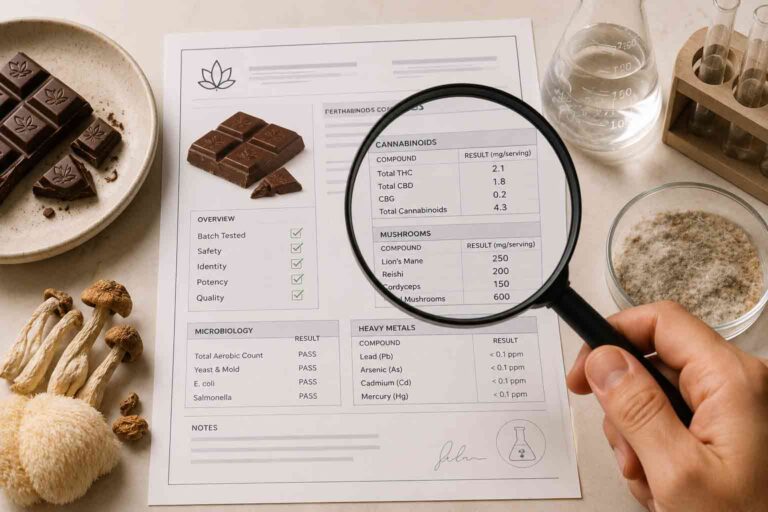
Third-Party Testing
With the medicinal mushroom market growing this rapidly, quality variance is substantial. Look for products with:
- Certificate of Analysis (CoA) from independent labs
- Beta-glucan content verification (target: ≥20% for most species)
- Heavy metal and pesticide testing (mushrooms bioaccumulate environmental contaminants)
- Certified organic or wild-harvested sourcing where possible
Frequently Asked Questions
Q: What is the oldest documented use of medicinal mushrooms?
A: The oldest formal documentation is found in the Shennong Ben Cao Jing, compiled during China’s Han Dynasty (circa 200 CE), classifying Reishi as a “noble herb.” However, the oral traditions the text records are attributed to the legendary Shennong (circa 2700 BCE), suggesting use extending nearly 5,000 years.
Q: Are medicinal mushrooms safe to consume?
A: Most widely consumed medicinal mushrooms (Reishi, Shiitake, Lion’s Mane, Chaga, Cordyceps, Turkey Tail) have strong safety records at typical supplement doses. The U.S. FDA granted GRAS status to several species in April 2025. However, some individuals experience adverse effects, particularly with Reishi (dry mouth, insomnia, skin irritation reported by ~9% in a 2024 study). Anyone on immunosuppressive therapy, blood thinners, or chemotherapy should consult a healthcare provider before use.
Q: Does Lion’s Mane actually help with brain health?
A: Preliminary evidence is promising but not conclusive. Lion’s Mane contains erinacines and hericenones that stimulate Nerve Growth Factor (NGF). A 2020 double-blind RCT found improvements in daily living activities in Alzheimer’s patients over 49 weeks; a 2024 analysis found cognitive and energy benefits in older adults. Larger-scale human trials are ongoing. Current evidence supports caution and optimism — not definitive therapeutic claims.
Q: What is the difference between Reishi, Chaga, Lion’s Mane, and Cordyceps?
A: Each species has a distinct historical use, active compounds, and research profile:
- Reishi: Immune modulation, stress adaptation, liver support (Ganoderma lucidum / East Asia)
- Chaga: Antioxidant, anti-inflammatory, immune support (Inonotus obliquus / Siberia, Northern Europe)
- Lion’s Mane: Cognitive support, nerve regeneration (Hericium erinaceus / Asia, North America)
- Cordyceps: Energy, athletic endurance, ATP production (Ophiocordyceps sinensis / Tibet, China)
Q: How is medicinal mushroom quality assessed?
A: Key markers include beta-glucan content (measured by independent lab testing), source specification (fruiting body vs. mycelium), extraction method (hot water, alcohol, or dual), and third-party certification for heavy metals and pesticides.
Q: Is the medicinal mushroom industry regulated?
A: In the United States, medicinal mushrooms sold as dietary supplements fall under FDA DSHEA (Dietary Supplement Health and Education Act, 1994), meaning they do not require pre-market approval. However, the April 2025 FDA GRAS approval for several species represents a significant regulatory milestone. Japan has the most mature regulatory framework, with approved pharmaceutical applications for PSK (Turkey Tail) and lentinan (Shiitake) since the 1980s.
The Full Timeline: Medicinal Mushrooms Through History
| Era | Event |
|---|---|
| ~2700 BCE | Legendary Shennong systematically explores plant and fungal medicine in China |
| ~1000 BCE | Reishi documented in early Chinese writings and Taoist practice |
| ~200 CE | Shennong Ben Cao Jing compiled; Reishi classified as a “noble herb” |
| ~600–1000 CE | China develops cultivation techniques for Shiitake and other medicinal mushrooms |
| ~1000 CE | Shiitake widely cultivated on logs across China and Japan |
| 15th Century | Cordyceps documented in Tibetan highland medicine texts |
| 1598 CE | Li Shizhen’s Bencao Gangmu (Compendium of Materia Medica) compiled; documents extensive mushroom uses |
| 1928 CE | Alexander Fleming discovers penicillin — fungi enter modern pharmacology |
| 1955 CE | Russia recognizes Chaga as a medical treatment (Russian Medical Academy of Science) |
| 1968 CE | Solzhenitsyn’s The Cancer Ward introduces Chaga to Western readers |
| 1985 CE | Japan approves PSK (Turkey Tail) and lentinan (Shiitake) as cancer adjunct therapies |
| 1980s–1990s | Paul Stamets and Fungi Perfecti pioneer Western medicinal mushroom cultivation |
| 2000 CE | Reishi formally included in China’s State Pharmacopoeia |
| 2000s–2010s | Western supplement market expands; first mushroom coffee brands emerge |
| 2020–2025 | Pandemic drives immune supplement demand; market crosses $10 billion; major R&D investment begins |
| April 2025 | FDA grants GRAS status to Reishi, Cordyceps, and Chaga extracts |
| 2034 | Global medicinal mushroom market projected to reach $29.90 billion |
Conclusion
The history of medicinal mushrooms is not a straight line from ancient China to your supplement bottle. It is a deeply human story — of empirical observation accumulated over millennia, of cultural reverence for organisms that seemed to offer both health and transcendence, of scientific skepticism slowly yielding to evidence, and of a global market now betting billions that the ancient practitioners were onto something real.
The Shennong Ben Cao Jing classified Reishi as a noble herb nearly 2,000 years ago. The FDA confirmed it as safe in 2025. That gap — filled by centuries of traditional knowledge, mid-century Soviet clinical trials, Japanese pharmaceutical research, and contemporary randomized controlled trials — is the story of medicinal mushrooms. And by most indicators, the most significant chapters are still being written.
What remains constant across every era: these are organisms that deserve respect, careful study, and honest representation. The traditional healers who first used them were not naive. And the scientists studying them today are not reinventing the wheel — they’re explaining why the wheel worked.
References and Sources
- Shennong Ben Cao Jing (Classic of the Materia Medica) — Han Dynasty, circa 200 CE. Translated edition: The Divine Farmer’s Materia Medica, Blue Poppy Press, 1998. [Primary source]
- Wachtel-Galor, S., Yuen, J., Buswell, J.A., & Benzie, I.F.F. (2011). Ganoderma lucidum (Lingzhi or Reishi): A Medicinal Mushroom. In: Herbal Medicine (2nd ed.), CRC Press/Taylor & Francis. PMID: 22593926. PubMed
- Towards FnB / Precedence Research (September 2025). Global Medicinal Mushrooms Market Report 2025–2034. Retrieved from Yahoo Finance / Globe Newswire.
- Market.us (April 2025). Medicinal Mushrooms Market Size, Share & Growth 2025–2034. market.us/report/medicinal-mushrooms-market/
- Muroya, M., Nakada, K., Maruo, K., & Hashimoto, K. (2025). Effects of β-glucans on fatigue: A systematic review and meta-analysis. European Journal of Clinical Nutrition. DOI: 10.1038/s41430-025-01567-4. PMC
- Li, I.C., et al. (2020). Significant Improvement in Daily Living Activities in Alzheimer’s Patients Following Lion’s Mane Mycelia Treatment. Phytotherapy Research. [Referenced in Alzheimer’s Drug Discovery Foundation Cognitive Vitality Report]
- Alzheimer’s Drug Discovery Foundation (2024). Lion’s Mane: Cognitive Vitality For Researchers. alzdiscovery.org
- PeakBridge VC (September 2025). Are Functional Mushrooms Ready for Prime Time? peakbridge.vc
- Technavio (2025). Medicinal Mushrooms Market Size, Share & Forecast 2024–2029. Forecasts USD 9.31 billion market expansion at 12.3% CAGR. technavio.com
- NCT07405957 (ClinicalTrials.gov, 2026). Effects of Two Different Lion’s Mane Extracts on Cognitive Performance, Gut Microbiota, and Serum Biomarkers in Healthy Adults. Applied Food Sciences / Center for Applied Health Sciences.
- Unschuld, P.U. (1986). Medicine in China: A History of Pharmaceutics. University of California Press.
- Stamets, P. (1993). Growing Gourmet and Medicinal Mushrooms. Ten Speed Press.
- Wikipedia: Shennong Ben Cao Jing — en.wikipedia.org/wiki/Shennong_Ben_Cao_Jing — citing oral tradition compiled circa 1st–2nd century CE.
- ScienceDirect (April 2024). Exploring the therapeutic properties of Chinese mushrooms with a focus on anti-cancer effects: A systemic review. sciencedirect.com
Medical Disclaimer: This article is for educational and informational purposes only. It does not constitute medical advice. Medicinal mushrooms are not FDA-approved drugs for the prevention or treatment of any disease. Consult a qualified healthcare provider before beginning any supplementation, particularly if you are pregnant, immunocompromised, or taking prescription medications.