Anxiety is exhausting. Not only in the more apparent, pulse-pounding, worst-case-scenario-running sense of it, but also in the less noticeable, yet insidious sense that it burns your low bar. It is the subtle buzz of discomfort that causes it to be more difficult to concentrate, become lighter in sleep, and make even the commonplace decisions weightier than they ought to be.
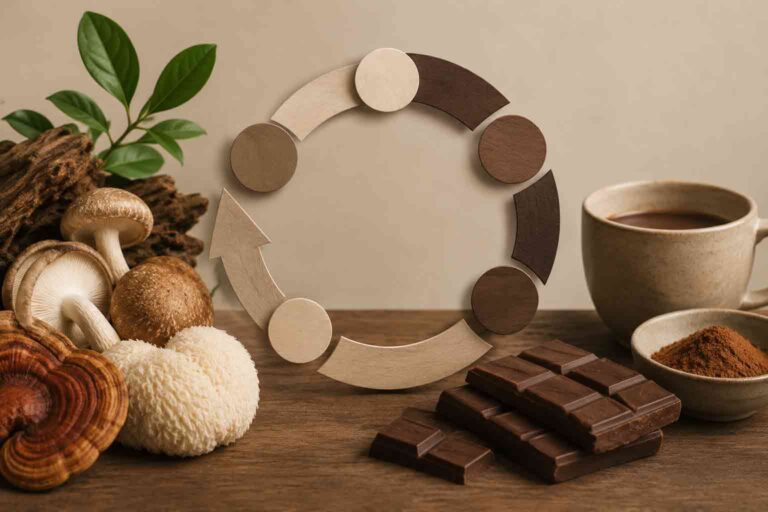
Microdosing for anxiety is like medication in the form of legal functional mushroom blends, which are increasingly sold in formats such as mushroom chocolates. It has become a distressingly important object in their daily wellness arsenal. Not so much as a form of crisis intervention, but rather an ongoing, cumulative treatment of retuning a nervous system that has been overheating too long.
This article will cover what the science really tells us and how these compounds are going to respond to your nervous system.
Why Anxiety Is a Nervous System Problem First
It is helpful to see how it works before going into solutions. Anxiety is not merely a way of thinking or a character trait—it is a state of being. In particular, it is a sympathetic nervous system (your fight-or-flight) overactivation as compared to the parasympathetic nervous system (your rest-and-digest) one.
The body is unable to properly switch between these two states under chronic stress. The hormonal system in charge of cortisol (the HPA axis) dysregulates. Cortisol remains high after the time of usefulness. Inflammatory markers rise. Sleep quality degrades. In a nutshell, the nervous system becomes trapped in a state of vigilance that is annotated to short-term dangers, rather than the incessant, low-grade stress of modern-day living.
This is the environment that the functional mushroom microdosing functions on. It is not that the stress response should be suppressed, but rather the balance in the regulation that has been disturbed by chronic anxiety should be reestablished.
How Functional Mushrooms Address Anxiety at the Root
Reishi: The Adaptogenic Foundation
Reishi (Ganoderma lucidum) is the most directly applicable functional mushroom to the existing research literature with regard to microdosing to treat anxiety.
The main bioactive compounds of Reishi, triterpenes, and high-molecular-weight beta-glucans have shown significant impacts on the stress response mechanism of the body in various peer-reviewed research. In a study published in the Journal of Medicinal Food, Reishi supplementation was linked to a significant decrease in fatigue and anxiety with positive quality of life scores that remained through the duration of the study.
The mechanism is based on the activity of Reishi on the HPA axis. Being an adaptogen, it does not dull your response to stress homogeneously, but instead, it normalizes your response to the stress. There is a spike in cortisol where necessary and, more importantly, it subsides when it is not. That off switch is missing in the case of chronic anxiety-informed individuals among us.
In practice, the individuals who have taken Reishi long-term never experience this effect as sedation but rather as physiological composure. The signal of anxiety does not always go away, but the automatic, accelerating response of the body to it slowly becomes calmed.
Lion’s Mane: Rewiring the Anxious Brain
Another, though complementary, mechanism that lion’s mane (Hericium erinaceus) activates to alleviate anxiety is neurogenesis and neural repair.
Anxiety is linked to brain physiology, specifically, brain reduction in hippocampal volume and poor connectivity in the prefrontal cortex, the brain area that handles rational thinking, emotional control, and making of decisions. The literal result of chronic stress is a remodelling of neural architecture, which maintains the cycle of anxiety.
The ability of Lion’s Mane to induce the production of Nerve Growth Factor (NGF) is pertinent in this case directly. NGF helps to sustain, nourish, and develop neurons—even in areas of the brain such as the hippocampus and prefrontal areas that are highly impaired under chronic stress. According to a 2019 study conducted by the field of biomedical research, Lion’s Mane supplementation was linked to a lower score in depression and anxiety, and the authors observed an increase in sleep quality and concentration as collateral effects.
This is slow medicine. But it is structural medicine, the kind that does not merely treat symptoms but over time rejuvenates the neurological base that has been corroding the foundations of anxiety.
The Gut-Brain Connection
The gut-brain axis is one of the least reported aspects of microdosing to treat anxiety, the two-way communication system between your digestive system and your central nervous system.
The gut produces about 90 percent of the serotonin in the body, not the brain. The composition of gut microbiomes is directly and well-reported to impact mood, level of anxiety, and reactivity to stress. Prebiotic-like effects were demonstrated by Reishi and Chaga (Inonotus obliquus) in both emerging research—beneficial gut bacteria and lessening gut inflammation. In the anxiety sufferer who experiences the digestive disturbance with the mindful stress, the gut-first route could be one of the most significant processes in which a functional mushroom microdosing causes peaceful effects.
Format, Consistency, and Why Both Matter
The bioavailability and, most importantly, consistency of use of your functional mushroom supplement depend on the delivery format in a meaningful way. Both have a direct effect on anxiety-related outcomes.
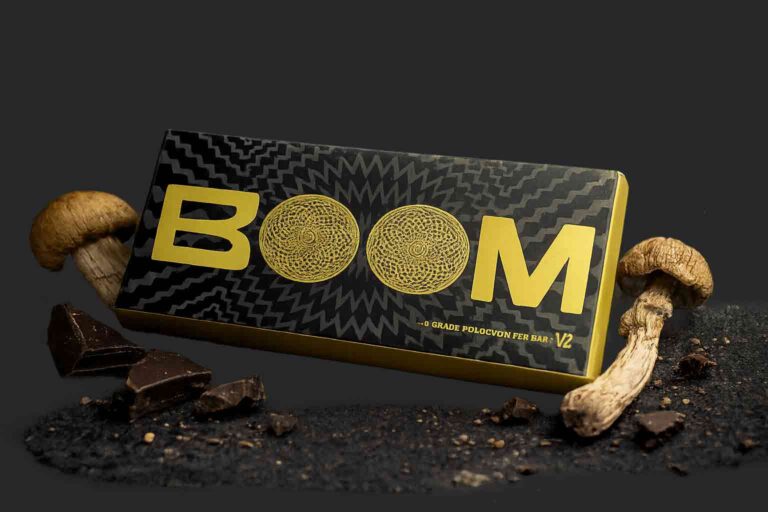
Products like the Boom Bar make daily microdosing practical without friction. The bars are split into squares that are equally dosed, and thus it is easy to manage the amount of water you are drinking, and it is accurate, and you cannot overdo it or underdo it. The natural theobromine found in dark chocolate offers a slight alteration of mood, which is also adaptogenic like Reishi without the subsequent cortisol burst of caffeine. The absorption of fat-soluble compounds is also enhanced by the fat content of good chocolate.
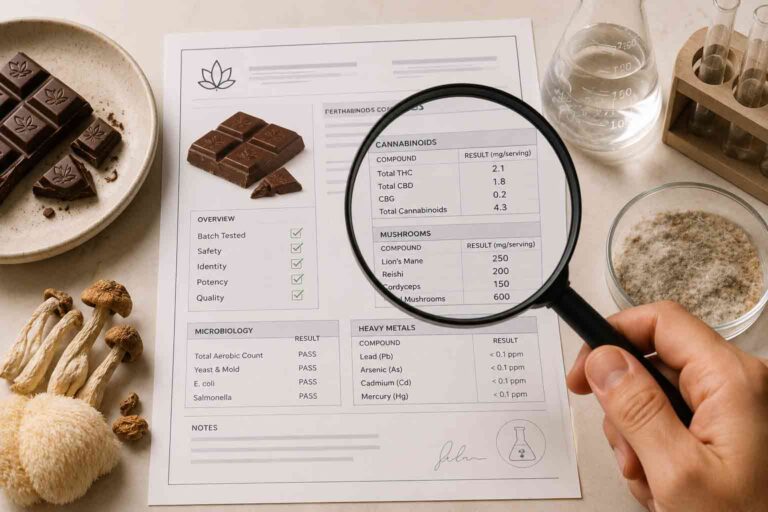
In any format, the following items are what to focus on in any operational mushroom product: transparent sourcing, verifiable fruiting body extraction, and the stated quantities of active compounds per serving. Dose consistency is no longer a nice-to-have—in the case of anxiety management in particular, it is the whole game.
The Bottom Line
The research suggests functional mushroom microdosing can contribute meaningfully to anxiety relief when used correctly. The better question is whether you’re willing to approach microdosing for anxiety the way it actually works: as a patient, consistent, compounding practice rather than a shortcut. If the answer is yes, the evidence gives you good reason for cautious optimism.