Functional mushrooms have taken the wellness world by storm, and if you have spent any time browsing health food stores or scrolling through social media, you have probably noticed them showing up in some unexpected places. Mushroom coffee sits next to your regular morning brew. Mushroom chocolate bars line the shelves beside artisan dark chocolate. And mushroom gummies have found their way into the supplement aisle, looking almost identical to the vitamins you grew up taking. But here is the real question that most people ask once they get past the novelty: which format actually works best?
That is exactly what this article is going to answer. We are going to break down each format, how it is made, how your body absorbs it, and what kind of results you can realistically expect. By the end, you will know which mushroom product deserves a place in your daily routine.
What Are Functional Mushrooms and Why Do They Matter?
Before diving into formats, it helps to understand what makes functional mushrooms worth consuming in the first place. Unlike psychedelic mushrooms, functional mushrooms such as lion’s mane, reishi, chaga, cordyceps, and turkey tail contain bioactive compounds that support human health in measurable ways. These compounds include beta-glucans, triterpenes, hericenones, and erinacines, depending on the species.
Beta-glucans are among the most studied compounds and are known for their ability to modulate the immune system. Triterpenes, found abundantly in reishi, are associated with stress reduction and liver support. Hericenones and erinacines, unique to lion’s mane, are linked to nerve growth factor stimulation, which supports brain health and cognitive function.
The delivery format matters enormously because these compounds need to survive digestion, reach the bloodstream, and then get to the tissues where they do their work. How a product is made and what it is combined with directly affects how much of these compounds your body actually uses.
Mushroom Coffee: The Morning Ritual That Does Double Duty
What Makes Mushroom Coffee Different From Regular Coffee
Mushroom coffee is a blend of traditional coffee and powdered mushroom extract. Most brands use a dual extraction process to pull both water-soluble and alcohol-soluble compounds from the mushroom before drying the extract into a powder. This powder is then blended with ground coffee or instant coffee granules and packaged for everyday use.
The most common mushrooms used in coffee blends are lion’s mane, chaga, and cordyceps. Lion’s mane adds cognitive support to your morning focus, chaga brings a rich, earthy depth of flavor while contributing antioxidant support, and cordyceps is often included for its association with energy and endurance without the jittery feeling that too much caffeine alone can produce.
Who Should Choose Mushroom Coffee
Mushroom coffee is genuinely ideal for people who already drink coffee every morning and are looking for an easy, low-effort upgrade to their routine. You do not have to change anything about how you make your morning cup. You simply swap your regular coffee for a mushroom coffee blend, and you get your caffeine alongside a meaningful dose of functional mushroom extract.
The convenience factor is hard to overstate. There is no measuring, no separate supplement to remember, and no dramatic change in taste. Most mushroom coffees have a slightly earthier, more rounded flavor that many people actually prefer to straight coffee once they adjust.
However, mushroom coffee does have a ceiling. Because it is designed to blend seamlessly into a coffee format, the mushroom extract doses tend to be moderate rather than therapeutic. If you are managing a specific health concern and your practitioner has recommended high-dose reishi or lion’s mane, mushroom coffee alone probably will not get you there.
Absorption and Bioavailability in Coffee Format
Hot water is an excellent solvent for beta-glucans and many of the water-soluble polysaccharides in functional mushrooms. Brewing mushroom coffee with hot water essentially creates an infusion that your digestive system handles similarly to a mushroom tea. This means the water-soluble compounds have reasonably good bioavailability in this format.
Mushroom Chocolate: Where Indulgence Meets Function
How Mushroom Chocolate Is Made
Mushroom chocolate combines mushroom extract with cacao, creating a product that is genuinely enjoyable to consume. The best mushroom chocolates use high-quality dark chocolate with a high cacao percentage, typically 70% or above, which is important because cacao itself contains flavonoids and theobromine that complement the effects of functional mushrooms.
The manufacturing process matters a great deal here. Mushroom extract should be added after the chocolate has been tempered and cooled slightly, because excessive heat can degrade some of the more delicate bioactive compounds. Reputable brands pay close attention to this detail and will often mention their processing temperatures on the packaging or their website.
The Unique Synergy Between Cacao and Mushrooms
This is where mushroom chocolate becomes genuinely interesting rather than just a novelty. Cacao contains compounds that support mood, focus, and cardiovascular health on their own. When you combine cacao with lion’s mane, you are stacking cognitive support from two distinct mechanisms. When you pair it with reishi, the mood-calming properties of both ingredients create a complementary effect that many users report as a noticeably calm, focused state without sedation.
The fat content in chocolate also plays a functional role. Several mushroom compounds, particularly the triterpenes in reishi, are fat-soluble. Consuming them alongside the naturally occurring fats in cacao and cocoa butter can meaningfully improve their absorption compared to consuming the same extract in a water-based drink.
Who Benefits Most From Mushroom Chocolate
Mushroom chocolate tends to appeal most strongly to people who find supplement-taking tedious or unpleasant. If swallowing capsules feels like a chore and you are skeptical that you will stick with a powdered drink routine, a piece of mushroom chocolate in the afternoon is a genuinely sustainable habit. It feels like a treat rather than a health obligation.
It also works particularly well for people who want the benefits of reishi specifically, given the fat-solubility advantage mentioned above. An evening square of reishi mushroom dark chocolate, consumed as a dessert-like ritual, is a pleasurable way to wind down and support the kind of deep relaxation that reishi is known for.
Dosing Considerations With Chocolate
One challenge with mushroom chocolate is portion control. A well-formulated mushroom chocolate bar is divided into clear serving sizes, each containing a specified amount of mushroom extract. The temptation to eat more than one serving at a time is real, and while that is unlikely to cause harm, it does make managing your intake a bit trickier than with a precisely measured powder or a single gummy.
Mushroom Gummies: Convenience Packed Into a Chewable Form
What Goes Into a Mushroom Gummy
Mushroom gummies are made by combining mushroom extract with a gummy base, which typically consists of gelatin or pectin for vegan versions, sweeteners, flavorings, and sometimes additional vitamins or adaptogens. The extract is incorporated into the liquid gummy mixture before it sets, and each gummy is designed to deliver a precise, consistent dose.
The formulation quality varies enormously between brands. The best mushroom gummies use dual-extracted mushroom extract from the fruiting body, not the mycelium grown on grain, which contains significantly lower concentrations of the active compounds. Always look for brands that provide third-party testing and specify the beta-glucan content on their label, not just the total mushroom powder weight.
Bioavailability of Gummies: The Real Story
Here is where it gets nuanced. Gummies are convenient, but the gummy matrix can actually slow down how quickly the active compounds are released in your digestive system. Some of this is a neutral or even beneficial effect, similar to how slow-release supplements are designed. However, some gummy formulations add sugars and binding agents that interfere with absorption.
The good news is that the oral mucosa, meaning the lining of your mouth, can begin absorbing some compounds even as you chew. This partial sublingual absorption is modest but real, and it means that chewing your gummies thoroughly and holding them briefly in your mouth before swallowing can marginally improve how much you absorb.
Who Should Choose Mushroom Gummies
Mushroom gummies are the best choice for people who prioritize consistency and convenience above all else. They are pre-dosed, portable, require no preparation, and taste good enough that most people actually look forward to taking them. For parents managing children’s wellness supplements, gummies are often the only format that works without a battle.
They are also a strong choice for travelers. Carrying a few gummies in a small pouch is far simpler than packing ground coffee or breakable chocolate bars. The shelf stability of most gummies is excellent as well, making them practical for people whose routines vary.
Which Mushroom Format Has the Best Bioavailability?
This is the question underneath all the others. Based on how each format is made and how the compounds behave in your digestive system, here is the honest answer.
For water-soluble compounds like beta-glucans, mushroom coffee and properly prepared mushroom teas provide excellent bioavailability because hot water extraction mirrors the traditional preparation methods that have been used for centuries and are validated by research.
For fat-soluble compounds like triterpenes, mushroom chocolate wins because the natural fats in cacao improve absorption of these lipophilic molecules meaningfully.
For pure consistency and convenience, mushroom gummies deliver a reliable dose every single time with zero room for user error.
There is no single overall winner because the best format depends on which mushroom you are taking, which compounds you are targeting, and what fits your lifestyle realistically.
Comparing Taste and Daily Habit Formation
Taste as a Compliance Factor
The most effective health supplement is the one you actually take every day. This sounds obvious, but it is worth saying clearly. A perfectly dosed mushroom tincture that you dread consuming will serve you worse than a moderately dosed mushroom gummy that you genuinely enjoy.
Mushroom coffee wins for people who love coffee and find comfort in morning rituals. Mushroom chocolate wins for those who treat themselves to a daily piece of quality chocolate and can fit a functional version into that habit. Mushroom gummies win for anyone who wants the process to be as frictionless as humanly possible.
Building a Long-Term Routine
The research on functional mushrooms consistently shows that benefits accumulate over time rather than appearing dramatically after a single dose. Lion’s mane’s effect on nerve growth factor, for example, has been studied over periods of several weeks to months. This means that whichever format you choose, sticking with it matters more than optimizing every last percentage point of bioavailability.
Cost Comparison: What Are You Actually Paying Per Dose?
Breaking Down the Economics
Mushroom coffee is often the most cost-effective option per serving because the coffee itself is part of the product you would already be buying. You are essentially adding mushroom extract to a beverage you are going to make anyway.
Mushroom gummies tend to cost more per milligram of mushroom extract than powders or capsules, partly because of the manufacturing complexity of the gummy format and partly because of the added ingredients. However, the compliance advantage often makes the extra cost worthwhile.
Mushroom chocolate occupies a middle ground. High-quality dark chocolate is not cheap, and when you add premium mushroom extract to it, the price reflects both. However, if your alternative is expensive chocolate plus a separate mushroom supplement, a well-made mushroom chocolate bar can actually represent solid value.
What the Science Says About Each Mushroom Species by Format
Lion’s Mane in Coffee vs. Gummies vs. Chocolate
Lion’s mane contains hericenones and erinacines that are primarily water-soluble, which means coffee and other hot-water preparations are actually quite efficient at delivering these compounds. The research supporting lion’s mane for cognitive support has used both water extracts and ethanol extracts, so a dual-extracted lion’s mane in any format will provide good coverage.
Reishi and the Fat-Solubility Advantage
As discussed, reishi’s key triterpenes are fat-soluble, giving mushroom chocolate a genuine edge for this particular species. If you are specifically seeking reishi’s adaptogenic and sleep-supporting properties, pairing it with chocolate or another fat-containing food is a scientifically sound approach.
Cordyceps for Energy: Which Format Delivers Best
Cordyceps is commonly found in mushroom coffee blends because its association with energy and oxygen utilization makes it a natural fit for a morning drink. Its primary active compounds are water-soluble, so the coffee format delivers them well, and the synergy with caffeine creates a noticeably smoother and more sustained energy experience than caffeine alone.
How to Choose the Right Format for Your Goals
If your primary goal is cognitive performance and focus, look for lion’s mane in mushroom coffee for mornings or lion’s mane gummies for a midday boost.
If your goal is stress reduction and better sleep, reishi mushroom chocolate consumed in the evening is a particularly elegant solution that leverages the fat-solubility advantage and creates a calming nighttime ritual.
If your goal is immune support, chaga and turkey tail in any well-extracted format will serve you, but gummies offer the consistency of dosing that long-term immune support requires.
If your goal is athletic performance and endurance, cordyceps in mushroom coffee provides both the mushroom benefits and the caffeine to support physical output without overstimulating.
Conclusion
After examining all three formats in depth, the honest conclusion is that mushroom coffee, mushroom chocolate, and mushroom gummies each have genuine strengths. Mushroom coffee excels at delivering water-soluble compounds through a familiar daily ritual. Mushroom chocolate uniquely improves the absorption of fat-soluble compounds while making the experience genuinely enjoyable. Mushroom gummies offer unmatched convenience and consistency for people whose lives do not fit neatly around a morning coffee or an evening chocolate ritual.
The smartest approach for many people is actually to use more than one format strategically. A cup of lion’s mane mushroom coffee in the morning, a square of reishi chocolate in the evening, and a travel-friendly gummy for days when routine goes out the window covers most of the bases effectively. What matters most is that you choose high-quality products with transparent sourcing, real fruiting body extracts, and third-party testing. Start there, stay consistent, and functional mushrooms will almost certainly earn their place in your daily life.
Frequently Asked Questions
1. Can I take mushroom coffee, chocolate, and gummies together?
Yes, combining formats is generally safe and can actually be beneficial. Many wellness enthusiasts use mushroom coffee in the morning and mushroom chocolate or gummies later in the day. Since functional mushrooms are food-based supplements rather than pharmaceuticals, stacking formats simply increases your overall intake of beneficial compounds. Just be mindful of your total daily dose and choose products with transparent labeling.
2. How long does it take to feel the effects of functional mushrooms?
Most people begin noticing subtle effects within two to four weeks of consistent daily use. Some mushrooms like cordyceps may produce a mild energy effect relatively quickly, while lion’s mane’s cognitive benefits typically build gradually over several weeks. Reishi’s calming properties are often felt sooner, sometimes within the first few days of use.
3. Are functional mushrooms safe for everyone?
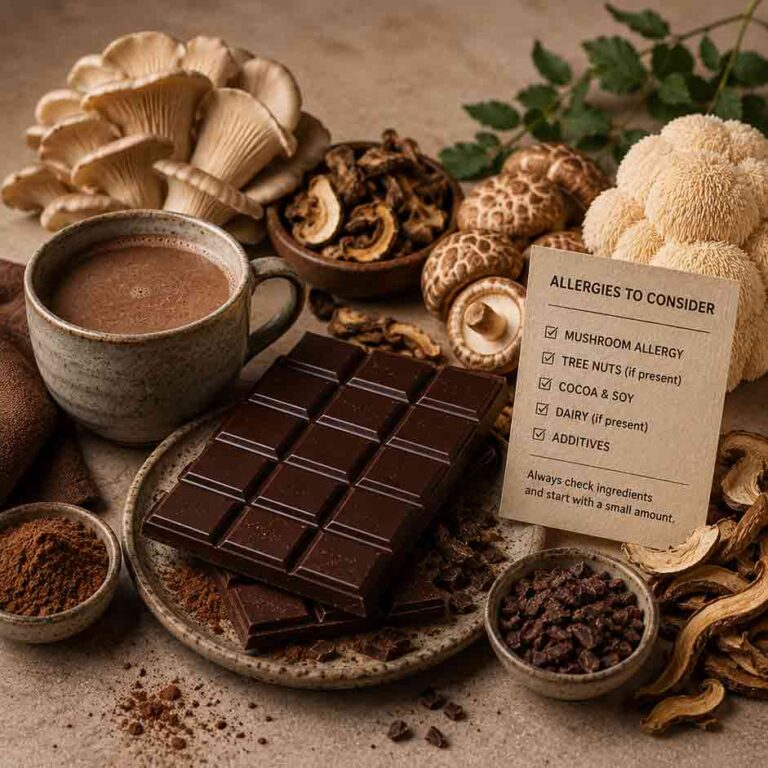
Functional mushrooms are well tolerated by most healthy adults. However, people who are pregnant, breastfeeding, immunocompromised, or taking prescription medications should consult a healthcare provider before adding any mushroom supplement to their routine. Those with mushroom allergies should also exercise caution regardless of the format.
4. What is the difference between fruiting body and mycelium extracts?
The fruiting body is the actual mushroom cap and stem, which contains the highest concentrations of active compounds like beta-glucans. Mycelium is the root-like structure, often grown on grain, which tends to contain lower levels of active compounds and higher amounts of starch. Always look for products that specify fruiting body extract for the most potent results.
5. Do mushroom gummies, coffee, and chocolate actually contain real mushroom extract?
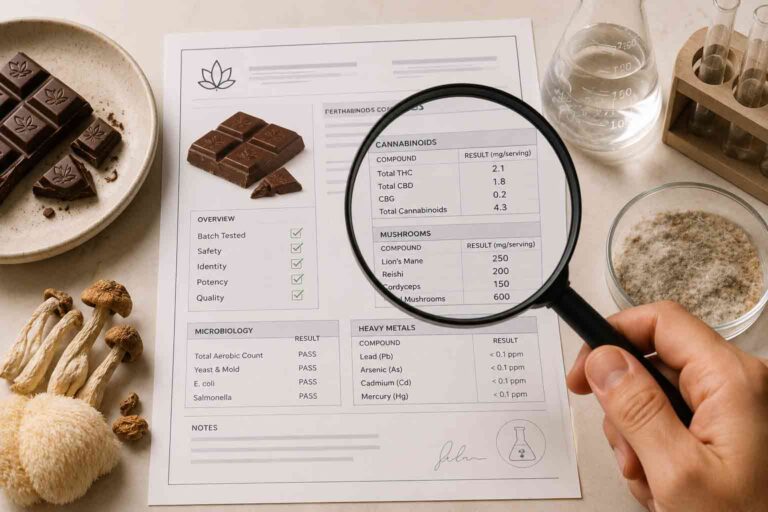
Quality varies significantly between brands. Reputable products will clearly state the mushroom species used, the extraction method, the beta-glucan percentage, and include third-party lab testing certificates. If a product only lists “mushroom powder” without specifying extraction ratio or active compound content, it is likely a lower-quality option that may not deliver meaningful benefits.